
Spring in Dayton feels great until that first heavy rain settles in.
The ground is already soaked from melting snow. Then a steady overnight storm rolls through. If your sump pump is not ready, your basement is the first place you will notice. Wet carpet. Damp drywall. That musty smell that lingers.
At Honey Go Fix It, we see it every spring. The good news is this is one of the easiest plumbing systems to check before storm season ramps up.
Why Spring Is the Right Time to Test Your Sump Pump
During winter, your sump pump may barely run. But spring is different.
The soil around your home becomes saturated. When the ground cannot absorb more water, it pushes groundwater toward your foundation. That water collects in your sump pit and your pump has to keep up.
If it fails, water rises.
Spring is when we get the most sump pump emergency calls in Dayton. Not because pumps are bad. But because they were never tested.
A yearly spring test gives you control instead of surprise.
How to Test Your Sump Pump in About 10 Minutes
Most homeowners can do this themselves. No special tools required.
1. Check the Power
Start simple.
- Make sure the pump is plugged in.
- Confirm the outlet works.
- If it is on a GFCI outlet, check that it has not tripped.
You would be surprised how many spring failures are simply power related.
2. Look Inside the Pit
Remove the cover if it is safe to do so.
You are looking for:
- Dirt or debris buildup
- Gravel that could block the pump
- A float that cannot move freely
The float is what signals the pump to turn on when water rises. If it is stuck, the pump will not activate during a storm.
3. Do the Bucket Test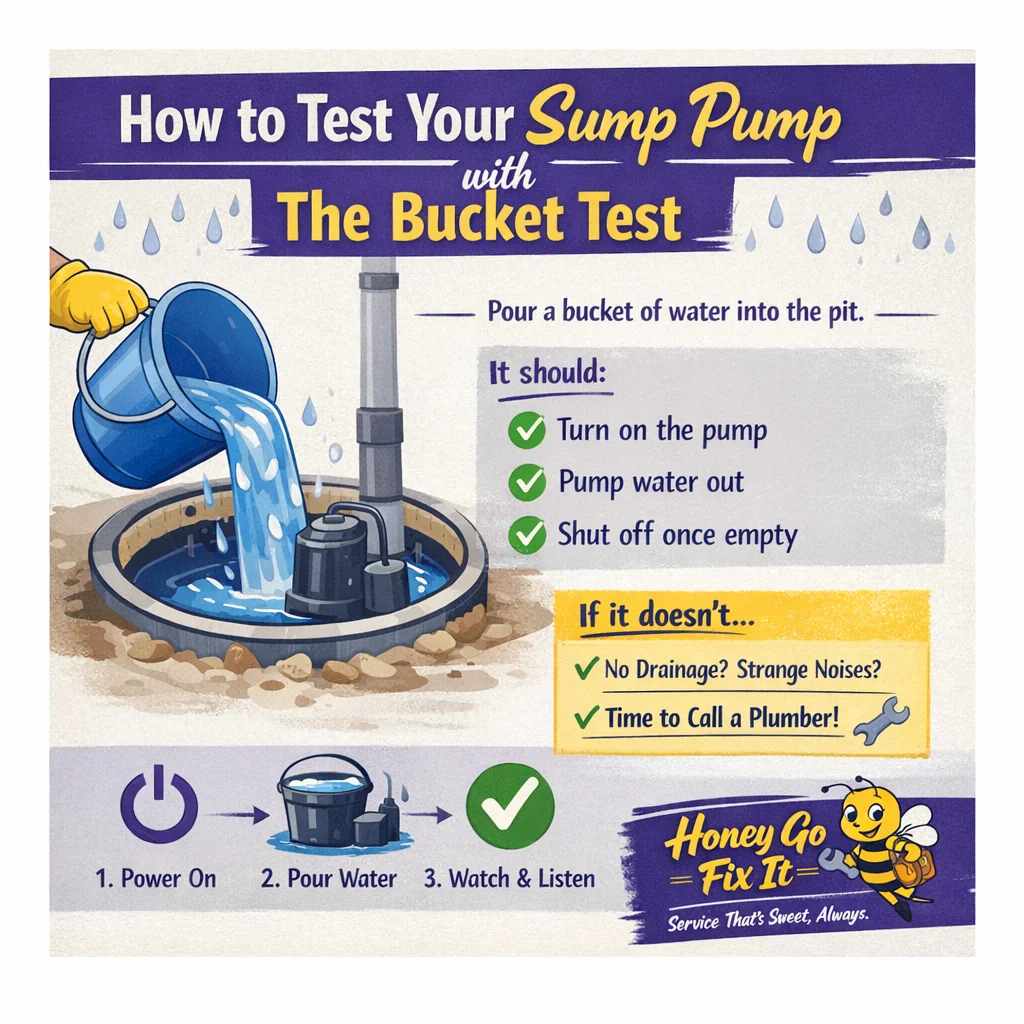
This is the most important step.
- Fill a bucket with water.
- Slowly pour it into the sump pit.
- Watch what happens.
A healthy pump will:
- Turn on as the water rises
- Remove the water quickly
- Shut off once the level drops
If nothing happens, or it hums but does not move water, that is your sign something is wrong.
4. Check the Discharge Line Outside
Go outside and find where the water exits your home.
Make sure:
- The pipe is clear.
- It directs water away from your foundation.
- It is not buried or blocked.
During a heavy Dayton spring rain, even a partially blocked discharge line can cause water to back up.
What Happens If You Skip It
Last spring, we worked with a family in Kettering who had recently finished part of their basement. New flooring. Fresh paint. Storage neatly organized.
Their sump pump had not been tested in years.
After two days of steady spring rain, the pump never activated. The motor had failed quietly months earlier. No one knew because it had not needed to run all winter.
Water damage followed. Cleanup, drywall removal, and flooring replacement added up quickly.
Testing once a year would have caught it early.
The Real Benefits of Testing Yearly
This is not just about avoiding a flood.
A yearly spring test helps you:
- Catch a failing motor before it quits
- Plan for replacement instead of reacting to failure
- Protect finished basements
- Reduce mold risk
- Sleep better during overnight storms
Most sump pumps last seven to ten years. If yours is older, spring is the time to pay attention.
Small effort. Big peace of mind.
When to Call a Licensed Plumber
Some issues are obvious. Others require a closer look.
Call a professional if:
- The pump does not turn on during testing
- It runs but does not remove water
- You hear grinding or loud noises
- It cycles on and off constantly
- It is over ten years old
If you rely heavily on your sump pump each spring in Dayton, it may also be wise to discuss a battery backup system. Spring storms often bring power outages. Without power, even a good pump cannot help you.
A Simple Spring Habit That Protects Your Basement
When you are thinking about spring cleaning, add this to your list.
Ten minutes. One bucket of water. A quick look outside. That is all it takes to know your sump pump is ready for the next heavy rain.
And if you would rather have a professional handle it, Honey Go Fix It is here to help.
We serve homeowners throughout Dayton and surrounding communities with honest inspections and clear recommendations. No pressure. No scare tactics. Just practical prevention.
If you want to feel confident before the next spring storm rolls in, call Honey Go Fix It or schedule a sump pump inspection online. A dry basement is always easier than a wet cleanup.