
November 16, 2026 | By Honey
Short answer for Centerville, Dayton, Beavercreek, Kettering, and Xenia homeowners: Knowing where your main water shut off valve is does not help if the valve does not work. Close it, then open a faucet and confirm nothing comes out — that takes about 30 seconds and it is the only test that proves anything. A valve can sit in the closed position and still pass water, which is called leaking past. If yours will not turn, or a trickle keeps running after it is shut, call Honey Go Fix It and we will swap it out on a scheduled visit.
Can I really prevent most water damage with one valve?
Yes, if it works. That qualifier is the entire point of this post.
Almost every homeowner guide tells you to go find your main shut off valve. Very few tell you the valve you just found might be seized, corroded, or quietly failing to seal — and that you will discover which one on the night you can least afford to.
Kassandra puts the priority plainly on the Honey Go Fix It podcast: “The best thing that you can do is just make sure that you have a functioning shutoff valve and you know where it is. As far as any of this other stuff, it's layers of protection. Main amount of protection is just a functioning shutoff valve. That's gonna give you eighty to ninety percent of the benefit.”
Eighty to ninety percent of your protection is a valve you already own. It just has to actually close.
Where is the shut off valve in a Centerville house?
Centerville is a mix — mid-century homes with basements alongside newer subdivisions, and a fair number of slab-on-grade builds where there is no basement to check. The search changes a little depending on which you have.
If you have a basement or crawl space, look along the wall facing the street. City mains run under the road, and the supply line enters your house at the closest point to it — nobody runs pipe to the back of the house, puts the valve there, and runs it forward again.
If you are on a slab, there is no basement wall to walk. Check the utility closet, the garage, or the wall behind the water heater.
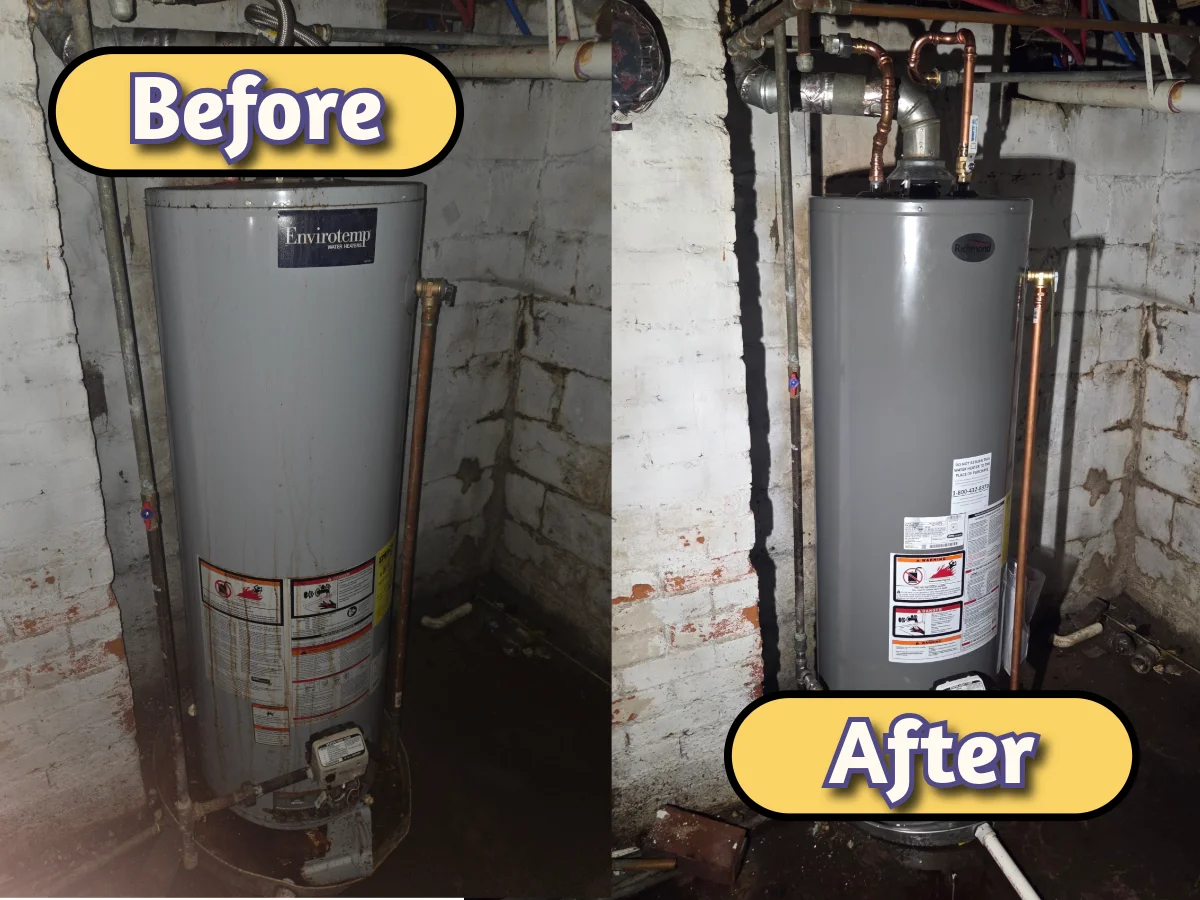
Either way, the water heater is your landmark. It is the biggest identifiable thing in the utility area, and the cold line feeding it usually comes straight off the main. Follow that cold pipe backwards and it will take you to a valve.
What does a working valve look like when I close it?
Two designs, and they behave differently.
A ball valve has a lever. On means the lever runs in line with the pipe; off is a quarter turn so it sits square across it. One motion. These are what we install now.
A gate valve has a round handle and takes several full turns to drive a metal gate down over the opening inside the valve.
The ball valve wins on speed, and speed is the whole game here. Kassandra: “the last thing that you want is to take extra time to shut something off in an emergency. Every second is, you know, possibly gallons more of water that is coming into your home.”
What is “leaking past,” and why does it matter so much?
Leaking past means the valve is closed and water is still moving through it. The handle stops, it feels shut, and it is not doing its job.
It is most common on gate valves, because the gate can jam just short of fully seated. Kassandra describes what that looks like inside the valve body: “it's mostly covered, but water would still be able to get through that because it jammed, not quite closed. It'll reduce the flow of water, but you will still have a trickle.”
A trickle sounds harmless. It is not, when a plumber is trying to cut into a line or you are waiting on a repair — that water has to go somewhere, and it keeps going for as long as the work takes.
How do I test it? (Two minutes, no tools)
- Locate the valve.
- Close it fully.
- Open a faucet somewhere in the house.
- Let it run down. Kassandra: “let it run until it's relieved all of its pressure. It'll take typically 10 to 30 seconds, and you should end up with no water flowing. Not a trickle.”
- Open the valve again.
Do this once or twice a year and you get a second benefit for free. Working the valve through its range is called exercising it, and it is what stops it seizing — “seized means that it's rusted, corroded, has sediment that's built up. Something is preventing you from easily turning it.”
A valve that gets moved twice a year does not seize. A valve nobody has touched since the house was built usually does.
Do not force a stiff valve
If it resists, stop. This is where a free two-minute check turns into a bill.
Kassandra on what forcing it actually risks: “in turning that valve you can crack the pipe that it's attached to. Or if the valve itself has corrosion, maybe the packing on it is old, then it can introduce leaks to actually use the valve.”
A stiff valve is not necessarily a broken one — sometimes it just needs leverage. But if you have never turned it, it looks corroded, or you would rather not be the person who finds out, have a plumber there when it moves for the first time. Replacing it on a Tuesday is a contained job. Snapping the stem on a Saturday night is not.
What about the little valves under my sinks?
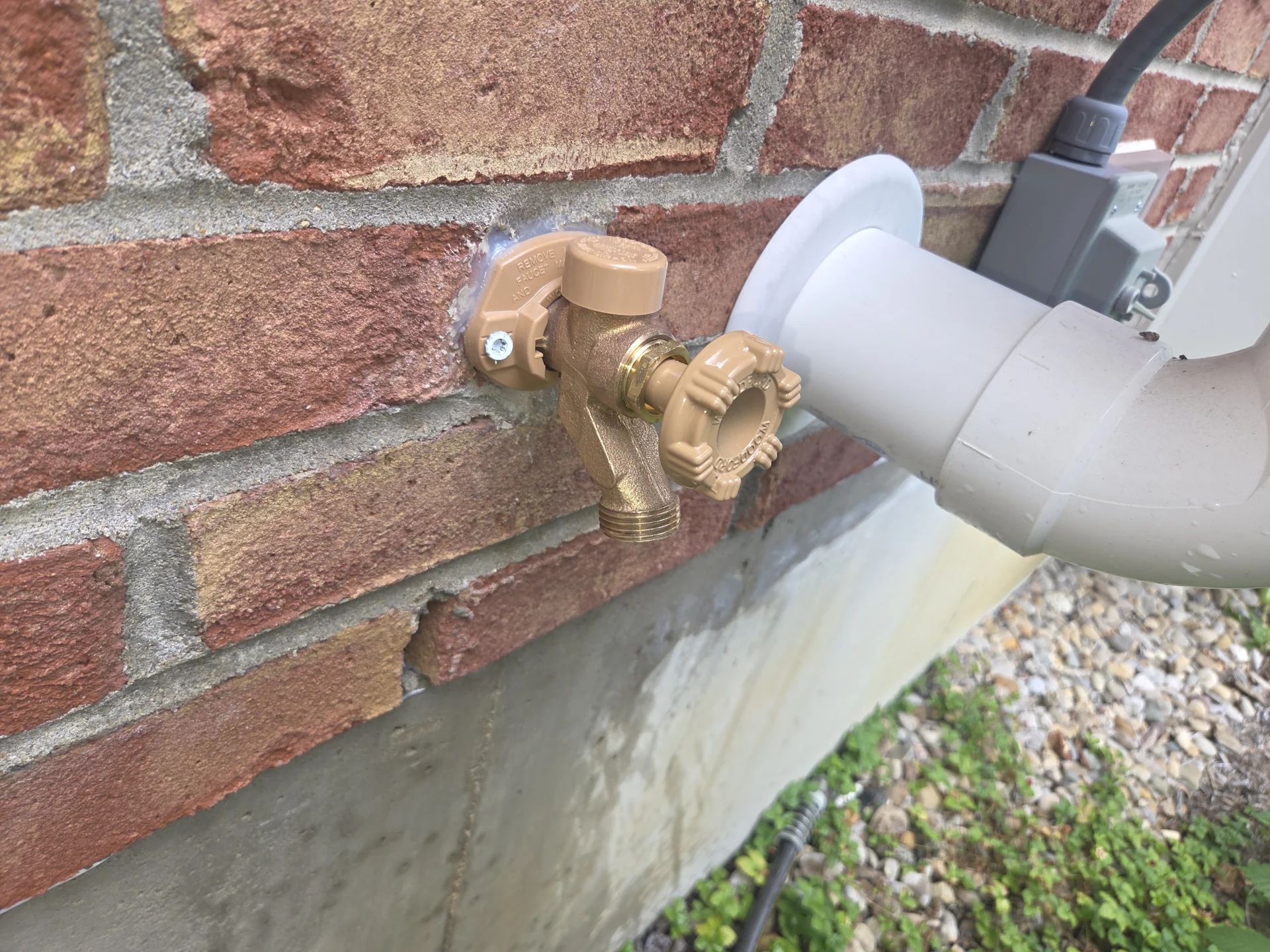
Those are fixture shut offs — often called angle stops, because the inlet and outlet run at right angles to each other rather than straight through like the main. They have small oval or stubby lever handles, and each one isolates a single fixture.
They are genuinely useful. As Kassandra explains, they let a plumber work on one faucet or toilet “without inconveniencing the rest of the home,” and in an emergency at that specific fixture, you can shut it off there and keep water everywhere else.
They need the same treatment as the main. “Any valve has the potential of seizing,” Kassandra says — “so that's another thing that you want to exercise. Shut them off, make sure that it's actually doing its job, that it is fully stopping the water.”
Next time you are under a sink for any reason, turn the stop off and on once. It costs you ten seconds.
Is an automatic shut off system worth it?
For some households, yes. A smart whole-house shut off — the Drop system is one we like — puts the valve on an app, so it can close without anyone being home or awake.
There may be money in it too. Kassandra: “check with your insurance company. The amount of benefit can vary, but a lot of times you can get a premium discount if you let them know that, hey, I have an automatic shut-off system installed in my home.”
It is an upgrade, not a substitute. If the manual valve behind it does not close, the smart system is protecting a house whose fallback does not work.
What does replacing a shut off valve cost?
It depends on the pipe material, how the valve is joined to the line, and how accessible it is — a valve in an open utility closet is a different job from one boxed in behind finished wall. Swapping an aging gate valve for a quarter-turn ball valve is a targeted repair, not a repipe.
We quote the specific job before we start, and the work carries our 1-year parts and labor warranty. Call for a number on yours.
Frequently asked questions
My Centerville home is on a slab. Is there still a main shut off inside?
Yes. Slab homes have one; it is just not in a basement. Look in the utility closet, the garage, or near the water heater on the wall closest to the street.
There is a valve out by the street at my Kettering house. Can I use that one?
That is the curb stop and it belongs to the water utility. It is a backup for when the valve inside the house has failed, and it needs a curb key to operate. Leave it to them and keep your indoor valve working.
How do I know which way to turn a ball valve in my Dayton home?
Look at where the lever is fixed to the valve body — there is a small stop that shows the open and closed positions. Turn whichever direction it moves and keep going until it stops at a quarter turn. Gate valves are harder to read visually; you simply turn until it will not turn further.
We are leaving our Beavercreek home for a couple of weeks. Should we shut the water off?
It is a sensible precaution. If you do, shut the water heater off too — running it dry damages it. Most water heaters have a vacation mode for exactly this.
Should my teenager in our Xenia home know where the valve is?
If they are ever home alone, yes. Kassandra's rule is anybody who is the primary adult at the property at any point in time — spouses, roommates, teenagers, and grandparents watching younger kids. Keep the path to the valve clear so they can actually get to it.
Check yours this weekend
Go and turn it. If it moves easily and the faucet runs dry, you are done and you have earned the peace of mind. If it sticks, weeps, or keeps passing water, you have found a problem on a calm afternoon instead of during a flood.
Call Honey Go Fix It at (937) 358-6390. Licensed master plumbers, Ohio license #50218, BBB accredited, and we answer 24/7.
Honey Go Fix It provides residential plumbing services for homeowners in Dayton, Beavercreek, Centerville, Springboro, Xenia, and nearby suburbs.