
Short answer for Centerville, Dayton, Kettering, Beavercreek, and Springboro homeowners: A backwater valve is a one-way valve in your sewer line. It lets water leave your house but closes if sewer water tries to back up into your basement. In October 2026 we installed one in a Centerville home for Montgomery County's Foundation Drain Disconnect Program, along with a new sump pit and pump. If your basement drain backs up in heavy rain, call Honey Go Fix It to schedule an inspection.
What is a backwater valve, and does my Centerville home need one?
A backwater valve sits in the main drain line under your basement floor. Inside it is a flap that swings open for water heading out to the sewer and drops shut if water starts coming the other way. It is installed in an access box so it can be opened and checked later.
Your home may need one if your basement floor drain or foundation drains still empty into the sanitary sewer. In many older homes, the water that gathers around the foundation after rain runs into the same pipe that carries sewage away. During a heavy storm, all of that extra water can overwhelm the sewer and push dirty water back up through the lowest drain in the house, which is usually the one in the basement floor.
What is the Foundation Drain Disconnect Program?
Montgomery County's Foundation Drain Disconnect Program, run by Montgomery County Environmental Services, works on that problem: getting groundwater out of the sanitary sewer. In a home like this one, that means the old floor drain is taken out of service, a backwater valve protects the sewer line, and a sump pit and pump give groundwater its own way out of the house. The program sets the specifications the work has to meet.
What did we find in this Centerville basement?
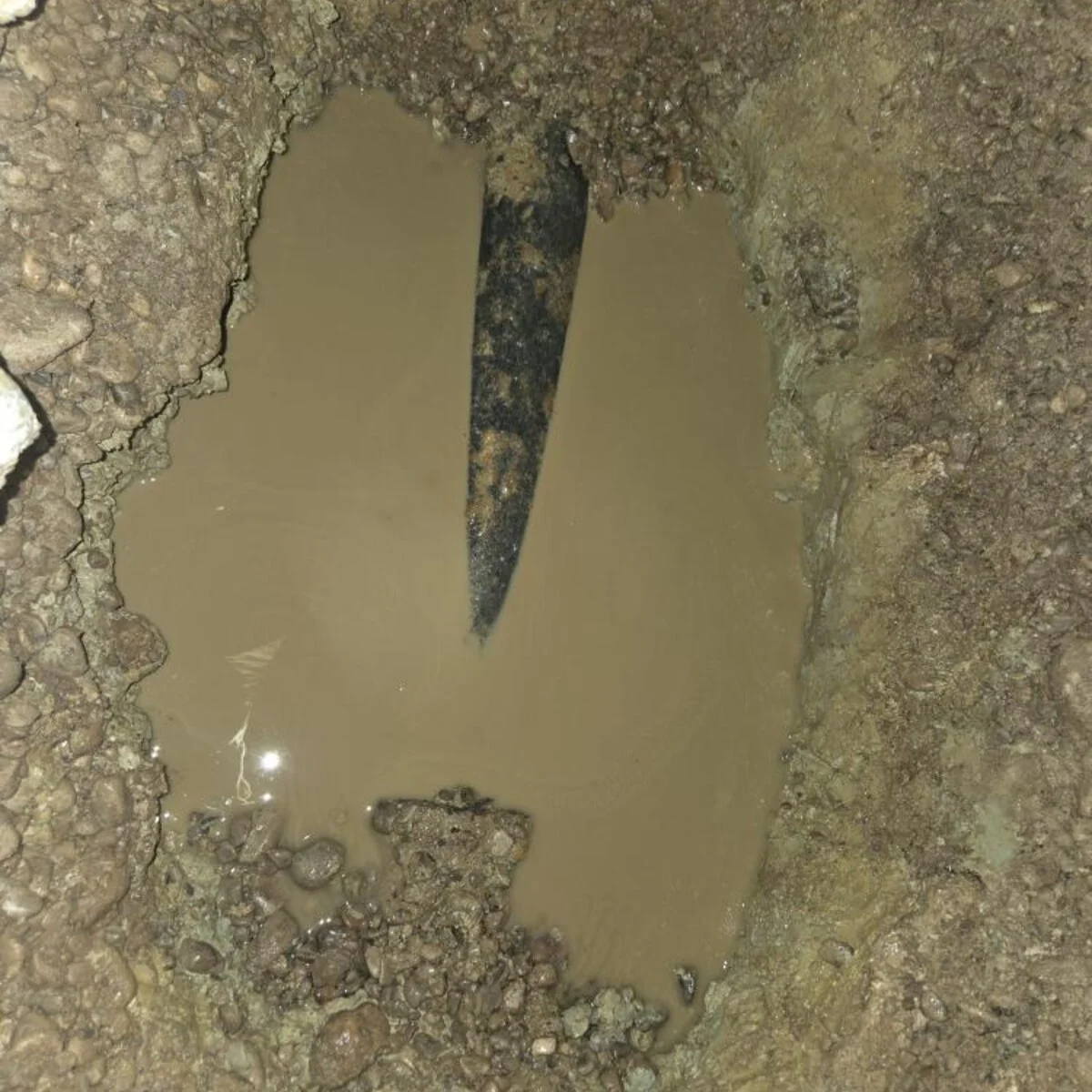
This Centerville home was enrolled in the Foundation Drain Disconnect Program. Before anything could be installed, Elijah had to get under the floor. Once the slab was opened, the old drain line was sitting in standing water below the basement floor.
We filed the permit with the City of Centerville, so the job is on record with the city.
What work goes into installing a backwater valve for the program?
Here is the work in the order it happened, all to the program's specifications.
1. Opening the slab
Elijah broke out the concrete to reach the drain lines below the floor.
2. Removing the floor drain
The old basement floor drain was taken out of service. The drain line was capped below the slab, waterproofed, and the concrete patched flush with the existing floor, so that drain can no longer let groundwater into the sewer or sewage back into the basement.
3. Installing the backwater valve
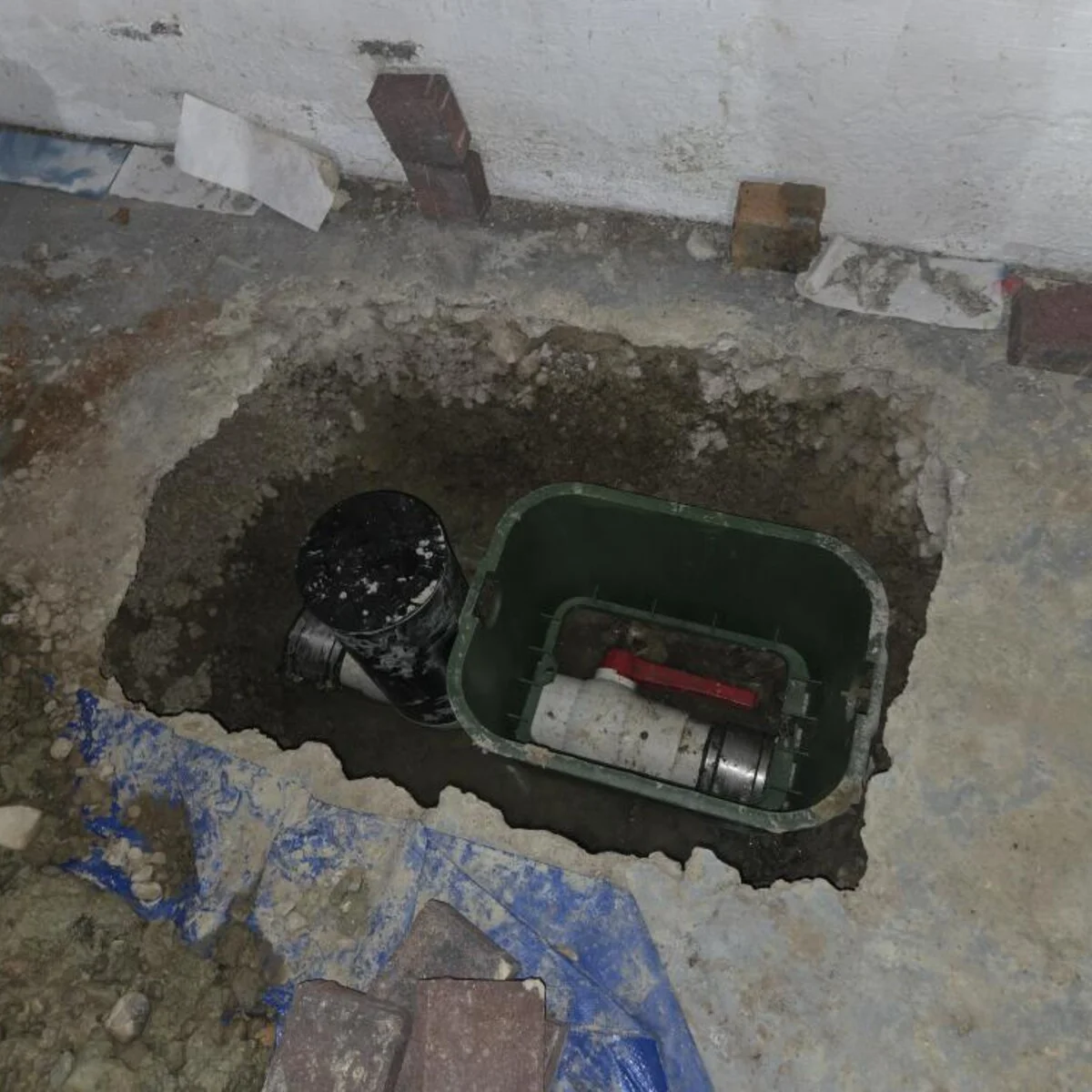
New PVC was tied into the sewer line and the backwater valve installed to the program's specs, set in its own access box so it can be inspected and cleaned later. The area around it was sealed with bentonite water stops (a clay material that swells when wet and closes off gaps), and an Ipanex admixture went into the concrete to make the patch itself more water-resistant.
4. Setting the sump pit and pump
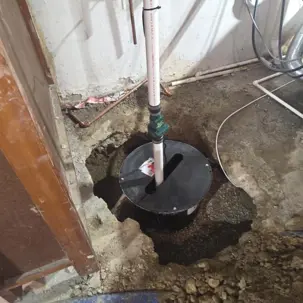
A new sump basin went in at the lowest point of the basement, set level and secure. Inside it went a heavy-duty Zoeller M53 1/3 HP submersible sump pump, plugged into a GFCI-protected outlet (an outlet that cuts power instantly if it senses a fault, which matters next to water).
5. Running the discharge line outside
The pump's discharge pipe runs up the basement wall, out through the foundation, and across the yard, so the water it moves ends up well away from the house instead of soaking back down against the walls it just came from.
How do we know the new system works?
We test the pump by pouring water into the pit to trigger it, then watch it switch on, push the water out through the discharge line, and shut off on its own. (You can do a version of that test at home; our sump pump testing guide walks through it.) The pump and its installation are backed by our 1-year parts and labor warranty.
Before, the basement floor drain was tied to the sanitary sewer, and a storm could send water back the other way. After, the floor drain is capped, the sewer line has a backwater valve, and groundwater has its own path out of the house.
Christiana A. put it simply in her Google review: "Elijah does amazing and honest work. The only honest plumber I know! It's a small company that treats its employees right, which makes it 100% worth supporting."
How can I find out whether my home needs a backwater valve?
Start with your basement floor drain. If it gurgles, smells, or has ever backed up during heavy rain, that is the clearest sign your drains and the sewer are connected in a way they should not be. If you have received information about the Foundation Drain Disconnect Program, we can look at your basement and tell you what the work would involve before anything starts.
Every backwater valve installation is quoted before work begins. What drives the job is where the pit can go, how far the drain lines run under the slab, and how the discharge line can be routed outside.
Backwater valve FAQ
Will a backwater valve stop my Centerville basement drain from backing up?
That is what it is designed to do. The valve closes if water tries to flow back in from the sewer, and capping the floor drain removes the most common way sewer water gets into a basement. Groundwater goes to the sump pump instead of the sewer.
Does my Dayton home need a sump pump along with a backwater valve?
In a Foundation Drain Disconnect Program job, yes. Once groundwater no longer drains into the sewer, it needs somewhere to go, and the sump pump is that path. Without one, the water has no way out of the pit.
How long does a backwater valve installation take in a Kettering home?
It depends on the basement. The slab has to be opened, the valve and pit installed, and the concrete patched and allowed to set, and the permit adds its own step on the city's side. Ask for a timeline when you get your quote.
Can I install a backwater valve myself in Beavercreek?
Not realistically. It means cutting concrete, working on the sewer line, setting a valve to a program's specifications, and pulling a permit. It is licensed plumbing work, and a mistake on the sewer side can put sewage in your basement.
Do I need to maintain a backwater valve?
Yes, occasionally. That is why it sits in an access box: it can be opened, checked, and cleared of debris so the flap keeps closing properly. We can show you where yours is and what to look for.
Questions about your basement? Call Honey Go Fix It at (937) 358-6390.
Honey Go Fix It provides residential plumbing services for homeowners in Dayton, Beavercreek, Centerville, Springboro, Xenia, and nearby suburbs.