
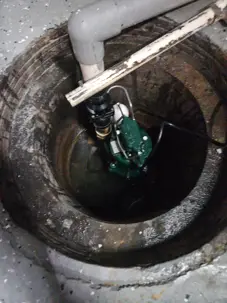
The fast version: if you can't remember the last time you tested your sump pump, that's your answer for this weekend. Pour a bucket of water into the pit and make sure the pump kicks on and the water level drops. Most pumps have somewhere around seven to ten years in them, and plenty of Kettering basements are still running whatever went in when the space was first finished. A battery backup matters here because fall storms take the power out at the same time they're dumping rain on you. Replacement runs about $1,300 to $5,000 installed, depending on whether you add that backup.
Alexis said something on a recent episode that a lot of people will recognize in themselves: "I do feel like I need to check my sump pump every time I hear about a major storm coming."
Right instinct. Almost nobody follows through on it.
Start With the Test, Not the Reading
Before anything else, go do this. Five minutes, tops.
- Carry a five gallon bucket of water down and pour it into the pit slowly.
- Watch the float. It should rise and the pump should start on its own.
- Listen to it. Humming without moving water is a bad sign.
- Then head outside and make sure water is actually coming out of the discharge and running away from the house.
If all of that went the way it should, you're in decent shape. If any of it didn't, keep reading.
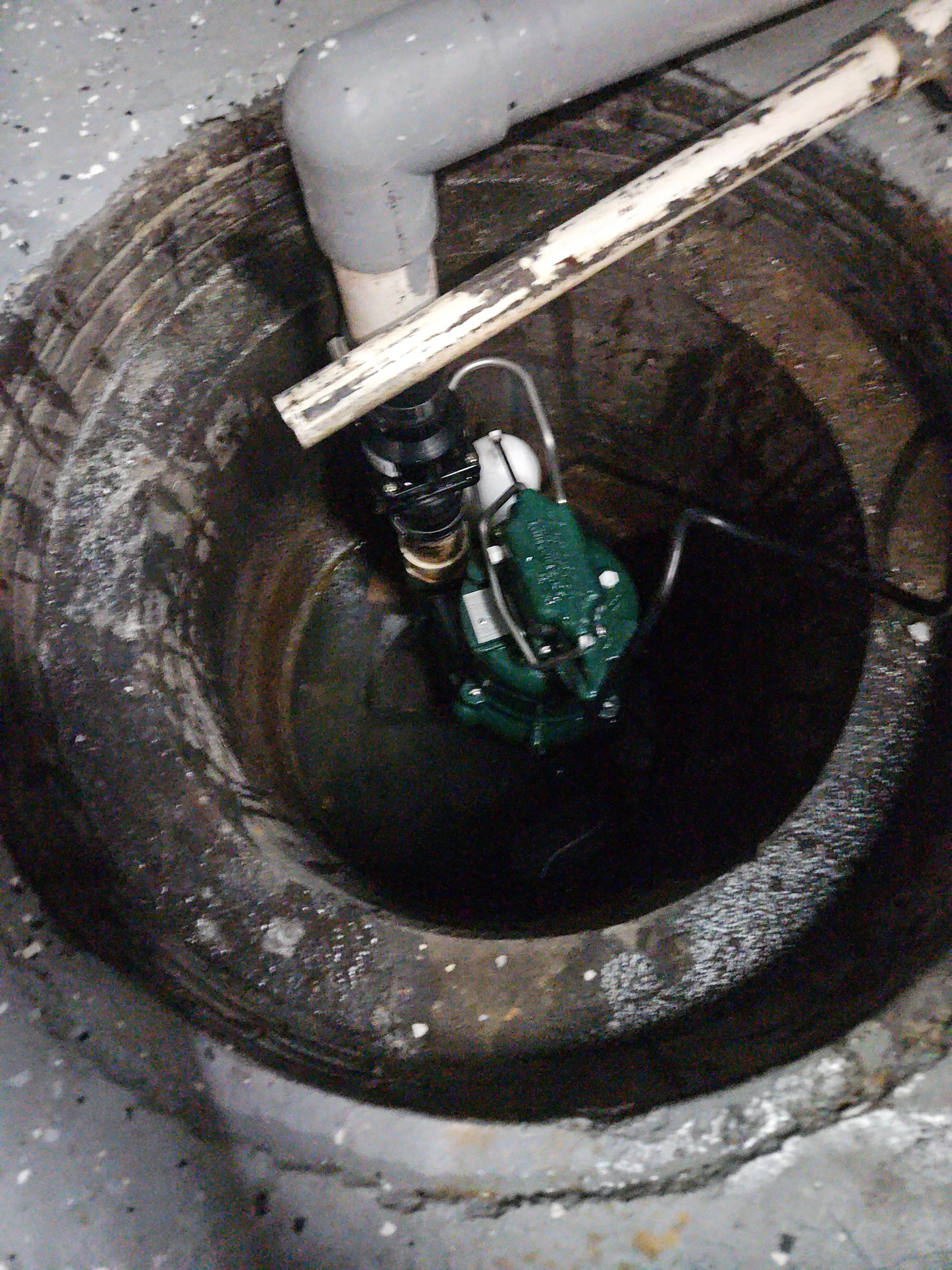
If the Test Failed, Here's What It Probably Is
Four things cover most of it, and you can narrow it down from what you saw.
Nothing happened at all. Check the cord first, because pumps get unplugged for a shop vac or a set of Christmas lights and never get plugged back in more often than you'd think. If it's plugged in and the breaker is on, the next suspect is the float switch. That's the piece that senses water and tells the pump to run, and floats get hung up on the discharge pipe or wedged against the side of the pit.
It hummed but the water didn't move. That's usually the impeller, the small fan inside the pump. Gravel and silt jam it, especially in an older pit with no lid on it.
It ran, drained the pit, then immediately ran again. That's the check valve, the one-way valve on the discharge line. When it fails, water drains back into the pit and the pump does the same job twice, forever. It's the fastest way to wear out a motor.
It ran fine but nothing came out outside. The line is blocked, frozen, or crushed somewhere between the wall and the yard. In October, leaves over the outlet are the usual culprit.
What the Pump Is Actually There For
"A sump pump is all about controlling groundwater," Kassandra Hornik explained. "When we have a large amount of rain, that groundwater level is going to come up higher and it can come up above the level of the living space."
Put simply, the water in the ground has a level, the same way a lake does. Rain raises it. Once it climbs past the height of your basement floor, it comes in unless something is actively moving it out. That's the pump's entire job.
The rest of that conversation is worth hearing on the episode if you've got twenty minutes.
Why Kettering Homes Are Their Own Case
A lot of the housing here went up in the fifties and sixties. Block foundations, drain tile that's original to the house, and basements that got finished decades after they were poured.
Old drain tile silts up over time. When it does, water that used to find its way to the pit takes a different route and finds a crack instead. The pump can be in perfect health and still never see the water that's coming in.
The other Kettering problem this time of year is leaves. Discharge lines that end near a flower bed or under a downspout disappear under a pile in October, and nobody notices until the pump is straining against a plugged pipe.
The Power Question
"If your sump pump is plugged into the wall and your home loses power, it's not going to be able to remove the water from your home," Kassandra said.
Fall storms are good at taking both at once, the rain and the electricity. A battery backup runs on its own and kicks in without anybody doing a thing. If your basement is finished, that's the piece I'd argue for first.
Repair or Replace?
Not everything needs a new pump, and I'd rather tell you that than sell you one.
A stuck float, a bad check valve, or a clogged discharge are repairs. If the pump itself is under about five years old and the motor sounds healthy, fixing the one broken piece is the right call.
Replacement makes more sense once the pump is past seven or eight years, or when the motor is showing its age, or when you're about to spend real money on a repair for a unit that's near the end anyway. It also makes sense when the pit or the discharge is wrong, because that's the moment to fix all of it at once instead of paying twice.
The other thing worth weighing is what you're protecting. In a lot of these houses the basement got finished long after it was built, and there's drywall, flooring, and a furnace down there now that the original setup was never really designed to protect.
Questions We Hear a Lot
How do I find out how old my pump is? There's usually a date stamp or a serial number on the housing. If you can read it, you have your answer. If the label is gone, that's information too.
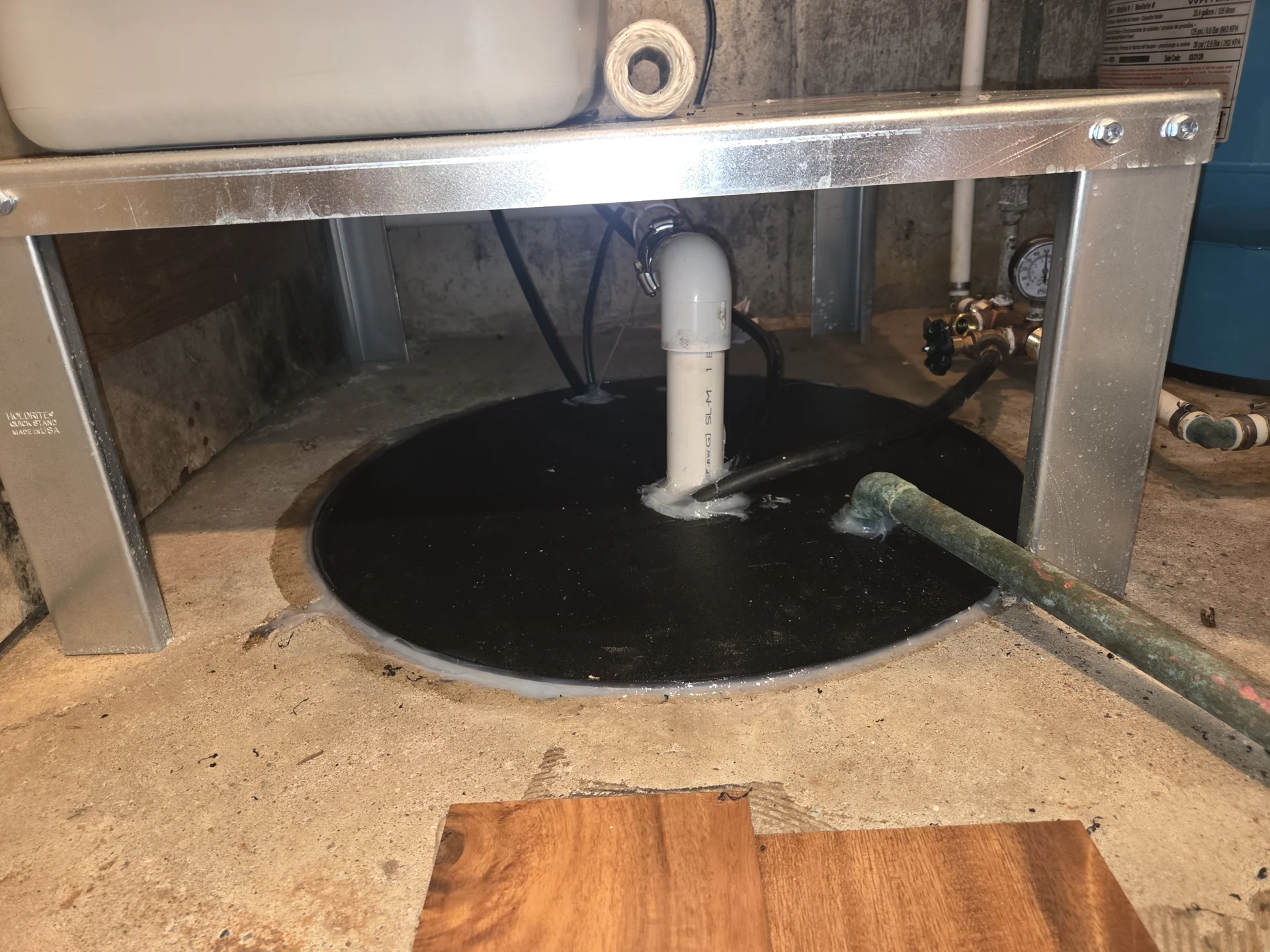
Should the pit have a lid? Yes. A sealed lid keeps debris out, cuts down on the humidity coming up out of the pit, and in some houses matters for radon. Plenty of older basements around here have an open hole in the floor and nothing over it.
What's the difference between a sump pump and the drain tile? The drain tile is the perforated pipe around your footer that collects water and carries it to the pit. The pump moves what the tile delivers. If the tile is silted up, a brand new pump won't help, because the water never reaches it.
Can I run the discharge into the floor drain? Most local codes say no, since that puts groundwater into the sanitary sewer. Worth checking with the city before you assume the existing setup is correct, because we find it plumbed that way in older homes fairly often.
Does homeowners insurance cover a sump pump failure? Usually not without a specific rider for water backup. Worth a five minute call to your agent, and worth doing before you need the answer.
What Replacement Runs
A straightforward primary pump replacement starts around $1,300. A combo system with a battery backup and the longest coverage runs up toward $5,000, with a six year Dry Basement Guarantee at the top end. There's a middle tier in the $2,300 to $3,500 range that fits most houses.
If your test didn't go well, or you have no idea how old the thing is, message us here on the site or book a visit and we'll look at it before the next round of storms.