
October 15, 2026 | By Honey
Short answer for Kettering, Dayton, Beavercreek, Centerville, and Xenia homeowners: Your main water shut off valve is almost always where the water line enters the house — start at your water heater and follow the cold line back, or look in the basement or crawl space on the street side of the property. Finding it takes about two minutes and no tools. Testing it matters more than finding it: shut it off, open a faucet, and confirm nothing comes out. If yours will not turn, or water keeps trickling after it is closed, call Honey Go Fix It and we will replace it on a day you pick instead of at two in the morning.
Do I really need to know where my main shut off valve is?
Yes — and it is the single highest-value thing you can learn about your own plumbing. When a supply line lets go, the pipe is not the expensive part. The water is. Every hour it keeps running, the damage and the bill both climb.
As Kassandra puts it on the Honey Go Fix It podcast: “It takes the water, cuts it off, won't flow, and it does it for your entire home. So it is the last line of defense for your home if there is a water leak.”
That is the whole argument. It is already installed in your house, it costs nothing to use, and most people have never touched it.
Where is the main water shut off valve in a Kettering home?
Kettering's housing stock leans mid-century, which means most homes here have a basement and the valve is usually easy to reach once you know what you are looking for. Two ways to find it:
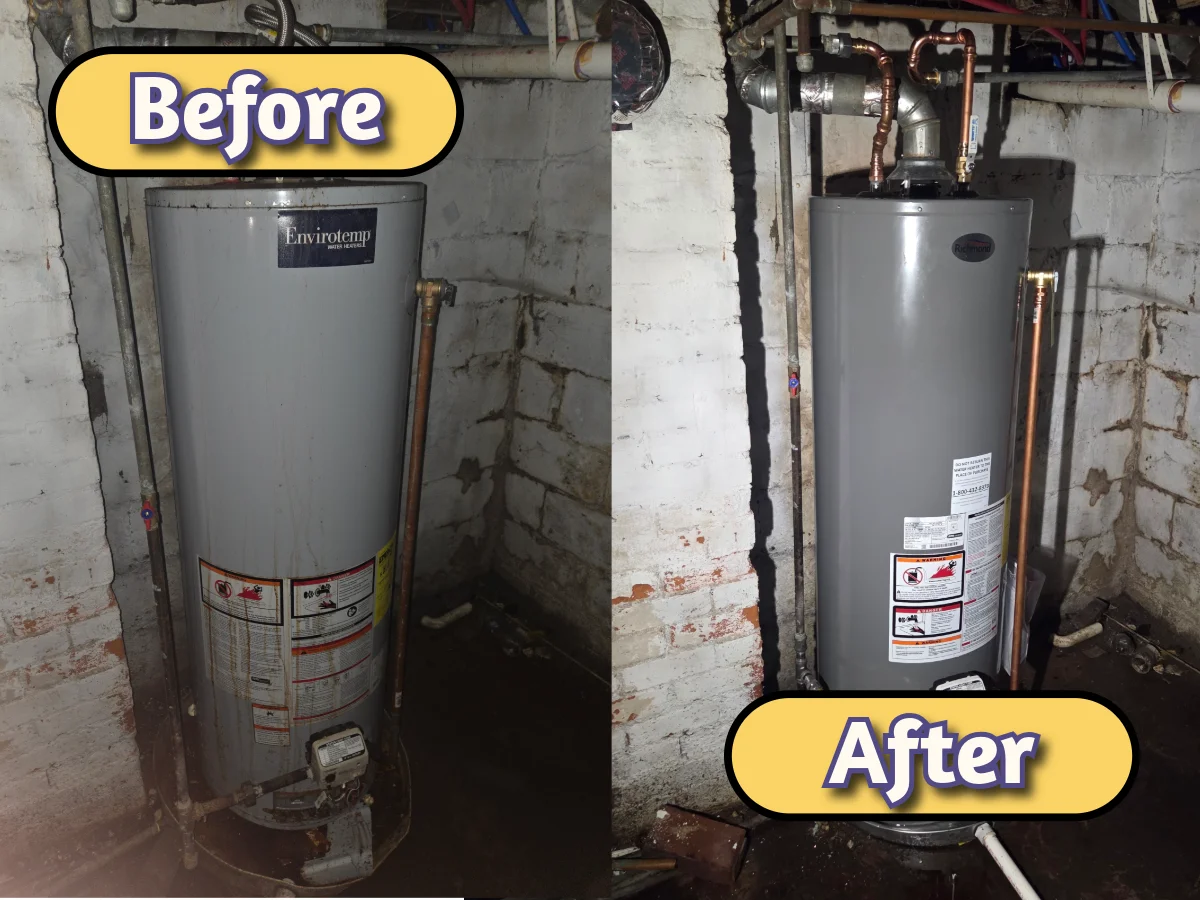
Start at the water heater. It is the biggest, most identifiable thing in the utility area. The cold line feeding it typically comes right off the main, so follow that cold pipe back and you will land on a valve. That is your main shut off.
Or check the street side of the basement. City water mains run under the street, and the line comes from the street into your house at the closest point — nobody runs pipe all the way to the back of the house, installs a valve, and runs it forward again. So the front foundation wall, on the side facing the road, is where to look.
There is also a curb stop — a second shut off out near the street, owned by the water utility. It exists partly as a backup for when the valve inside the house is broken or leaking, and partly so the city can shut water off at a property. That one is not yours to operate; it needs a curb key and it is the utility's asset.
What am I actually looking at — a ball valve or a gate valve?
This is the part that decides how your emergency goes, and in a Kettering home built before the 1980s you may well have the older of the two.
A ball valve has a lever handle. When the water is on, the lever sits in line with the pipe. Turn it a quarter turn so it sits perpendicular — square across the pipe — and the water is off. One motion, a second or two. These are the modern valves, and they are what we install.
A gate valve usually has a round, circular handle, and it is multi-turn — you crank it down several rotations to close a metal gate over the opening inside the valve body.
If you get to pick, you want the ball valve. Kassandra's reasoning: “because you have to turn it multiple times, it takes longer to shut off. And the last thing that you want is to take extra time to shut something off in an emergency. Every second is, you know, possibly gallons more of water that is coming into your home.”
What does it mean when a valve is “leaking past”?
Leaking past is when the valve is in the closed position but water is still getting through. The handle will not turn any further, it feels shut, and it is not.
On a gate valve, the metal gate lowers to cover the opening — but it can jam a fraction short of closed. As Kassandra describes it: “it's mostly covered, but water would still be able to get through that because it jammed, not quite closed. It'll reduce the flow of water, but you will still have a trickle.”
Both valve types can do it. Gate valves are notably worse for it, which matters in older Kettering homes where a gate valve may have sat untouched for decades.
How do I test my main shut off valve?
This is the two-minute version, and it is the shortest piece of homework we hand out:
- Find the valve.
- Close it — a quarter turn on a lever, or crank a round handle all the way down.
- Go open a faucet somewhere in the house and let it run.
- Watch for the flow to stop completely. Kassandra: “let it run until it's relieved all of its pressure. It'll take typically 10 to 30 seconds, and you should end up with no water flowing. Not a trickle.”
- Turn the valve back on.
Step three is the one people skip, and it is the only step that actually tells you anything. Closing the valve and walking away proves nothing.
Working the valve closed and open again is also worth doing on its own. It is called exercising the valve, and it keeps it from seizing — “seized means that it's rusted, corroded, has sediment that's built up. Something is preventing you from easily turning it.” A valve nobody has touched in fifteen years has a habit of seizing exactly when it is called on.
What if the valve will not turn?
Stop pulling on it. This is the one place in this article where the honest answer is to put the wrench down.
A valve that has started to seize can take real force to move, and force is what breaks things. Kassandra is direct about the risk: “in turning that valve you can crack the pipe that it's attached to. Or if the valve itself has corrosion, maybe the packing on it is old, then it can introduce leaks to actually use the valve.”
A snapped valve stem or a cracked pipe turns a two-minute check into an emergency, at your expense, on a day you did not choose. If yours is stiff, suspect, or has never been turned, that is a scheduled replacement — a contained job on a normal weekday, not a repipe.
Who in the house needs to know where it is?
Everyone who might be the only adult home. Kassandra's rule: “anybody who is going to be like the primary adult at the location at any point in time. So that means that you, your spouse, let's say any roommates that you might have, and then your teenage children, if you ever leave them at home alone, they should know where it is and how to use it.”
That includes grandparents watching younger kids, and a house sitter or neighbour if you are away. The person who finds the leak is not always the person who knows where the valve is.
Two practical follow-ups: keep the path to the valve clear rather than stacking storage in front of it, and make it obvious — a tag or a label means someone who has never been shown can still find it.
What about automatic shut off systems?
They exist and they work. One we like is the Drop system, a smart whole-house shut off valve you control from an app on your phone, including remotely. It can shut the water off for you rather than waiting for someone to be home and awake.
Worth a phone call to your insurer if you install one. Kassandra: “check with your insurance company. The amount of benefit can vary, but a lot of times you can get a premium discount if you let them know that, hey, I have an automatic shut-off system installed in my home.”
But keep the priority straight. “The best thing that you can do is just make sure that you have a functioning shutoff valve and you know where it is,” Kassandra says. “As far as any of this other stuff, it's layers of protection. Main amount of protection is just a functioning shutoff valve. That's gonna give you eighty to ninety percent of the benefit.”
A working manual valve you can find in the dark beats a smart system you bought instead of checking the one you already have.
What does it cost to replace a main shut off valve?
Cost depends on what the valve is attached to and where it sits — the pipe material, whether the line is copper or galvanized, how accessible the valve is, and whether the surrounding pipe is sound enough to work on. Replacing a seized gate valve with a modern quarter-turn ball valve is a contained repair, not a whole-house job.
We will give you a firm number before any work starts, and the installation is backed by our 1-year parts and labor warranty. Call us for a quote on your specific setup.
Frequently asked questions
My Kettering home was built in the 1950s. Do I definitely have a gate valve?
Not definitely, but it is likely if the plumbing has never been updated. Look at the handle: round and multi-turn is a gate valve, a lever is a ball valve. Plumbing gets replaced independently of the house, so a 1950s home can easily have a modern valve installed at some point.
I live in a Centerville home on a slab with no basement. Where is my valve?
On slab-on-grade homes the valve is usually in a utility closet, the garage, or near the water heater rather than in a basement. The same rule applies — follow the cold line back from the water heater, and check the wall closest to the street.
How often should I test the valve in my Dayton home?
Once or twice a year is plenty. Exercising it that often keeps sediment and corrosion from locking it in place, and it is the only way to catch a valve that has started leaking past before you need it.
I am going away for two weeks from my Beavercreek home. Should I shut the water off?
It is a reasonable precaution. If you do, turn the water heater off as well — a water heater is not meant to run dry, and leaving it powered with no supply can damage it. Most units have a vacation mode.
Water is actively running in my Xenia home right now. What do I do first?
Take a breath, then go to the water heater, follow the cold pipe back to the main, and close that valve. Stopping the flow comes before finding the source. Be cautious about standing water near outlets or anything electrical, and call us — we answer 24/7.
Get your valve checked before you need it
If you go and look this weekend and something seems off — it will not budge, the handle is corroded, or water keeps trickling after it is closed — that is worth a call now rather than at 2am.
Call Honey Go Fix It at (937) 358-6390. Licensed master plumbers, Ohio license #50218, BBB accredited, and we answer 24/7.
Honey Go Fix It provides residential plumbing services for homeowners in Dayton, Beavercreek, Centerville, Springboro, Xenia, and nearby suburbs.