
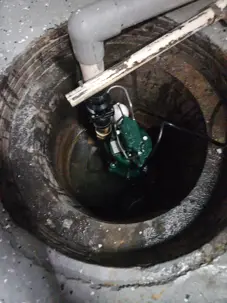
Bottom line: A sump pump sits in a pit below your basement floor and pushes rising groundwater back outside before it reaches your living space. Most basement flooding starts when that pump fails or loses power during a storm, the same storm that raised the water table in the first place. A battery backup pump runs on its own power, so it keeps working when the electricity is out. Replacement around Dayton runs roughly $1,300 to $5,000 installed, depending on whether you go with a single primary pump or a primary-plus-backup combo. Test yours with a bucket of water before storm season, not after.
Storms show up on the radar and most people think about the gutters. The sump pump sits in a hole in the floor doing nothing for months. Then one night it's the only thing between rising groundwater and your carpet.
We got into this on a recent episode with Kassandra Hornik, and the takeaway was simple. Check it while checking it is still easy.
How a Sump Pump Actually Works
"A sump pump is all about controlling groundwater," Kassandra said. "When we have a large amount of rain, that groundwater level is going to come up higher and it can come up above the level of the living space."
That's the whole job. Water in the ground rises after a long rain, and the pump sits in a pit below your slab to move it back outside before it finds a crack to come through.
Here in Dayton that matters more than it does in a lot of places. The century homes over in the Oregon District and South Park sit on stone and block foundations that were never built to hold water back. The clay soil doesn't drain quickly either. For plenty of these houses, the pump is the whole flood plan.
When one quits, the cleanup adds up fast. "That's where a lot of water damage situations come from," Kassandra said. "You have a sump pump, it fails, and then it's soaking into drywall, into carpet." A dry-out and repair can start around $2,000 and climb well past that once flooring and furniture are involved. Then there's the stuff you can't put a number on. Photo albums, letters, the boxes that came from your parents' house.
What Actually Breaks
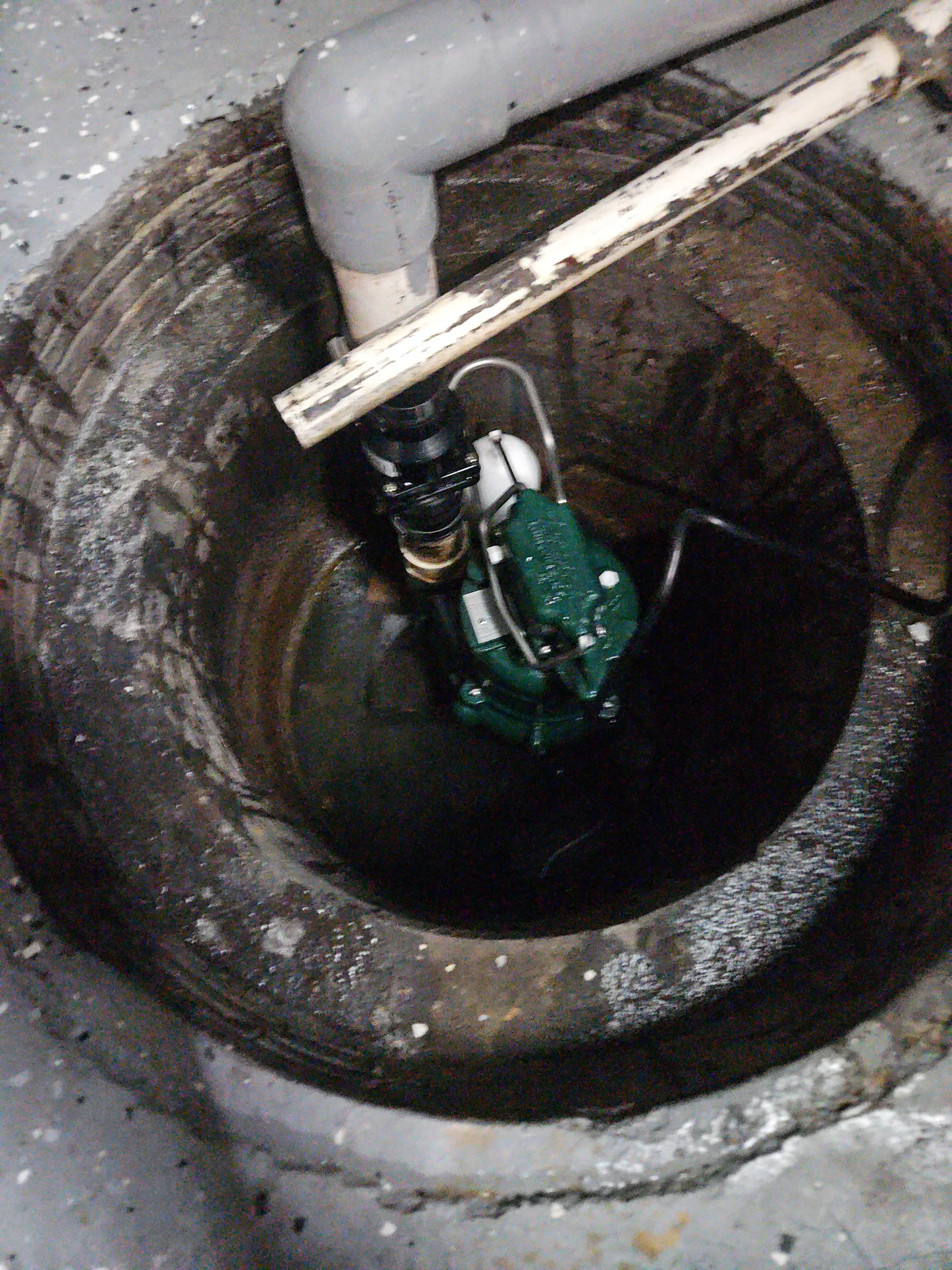
People say "the pump failed" like the motor burned up. Usually it didn't. Four things account for most of what we pull out of basements.
The float switch is the most common one. It's the piece that senses the water and tells the pump to run. Floats get stuck against the side of the pit, get hung up on the discharge pipe, or just wear out after enough cycles. The motor is fine. It never got the message.
The check valve is second. That's the one-way valve on the discharge line that keeps water from running back down into the pit after the pump shuts off. When it goes bad, the same water cycles up and back, the pump runs almost constantly, and it wears itself out doing work that never finishes.
Then there's the impeller, the small fan inside that actually moves the water. Gravel, silt, and whatever else finds its way into the pit will jam it. That's the pump you hear humming without moving anything.
Last is the pit itself. Sediment builds up over the years and the pump ends up sitting in mud. Some pits have a sealed lid and some don't, and an open one collects a surprising amount of junk over a decade.
Signs Yours Is On the Way Out
A pump rarely quits without warning. It usually gets strange first.
- It runs noticeably longer than it used to for the same amount of rain.
- It kicks on and off rapidly, a few seconds at a time. That's often a bad check valve, or a pit that's too small for the pump in it.
- Rattling, grinding, or a whine that wasn't there last year.
- Rust showing on the housing, or a motor that's hot to the touch after a normal run.
- It's past seven years old and nobody has looked at it since it went in.
None of those mean you need a new pump tomorrow. All of them mean it's worth a look before a storm makes the decision for you.
Why a Backup Pump Matters More Than You'd Think
Here's the part people miss. The storms that flood basements are the same storms that knock the power out.
"If your sump pump is plugged into the wall and your home loses power, it's not going to be able to remove the water from your home," Kassandra said.
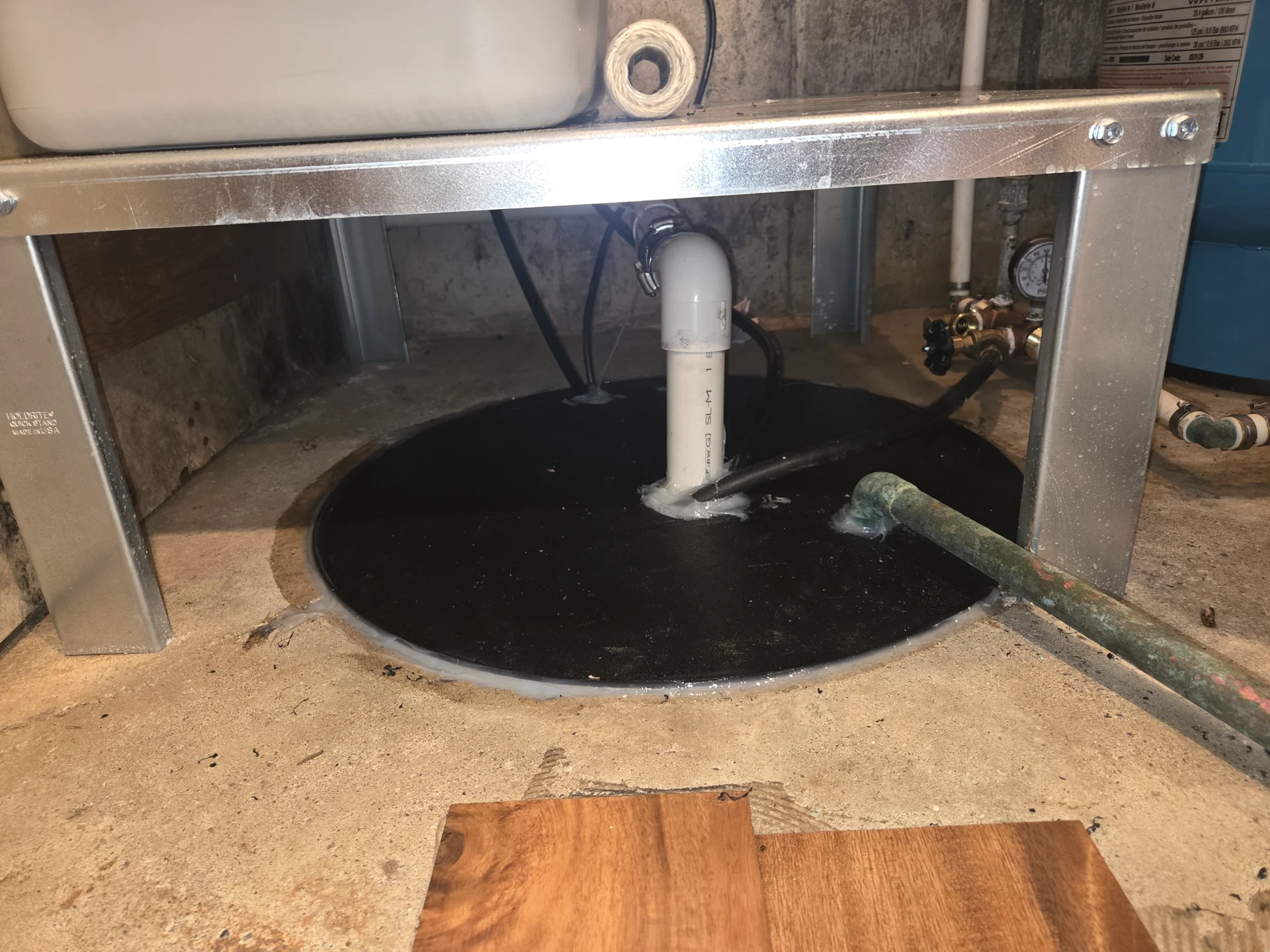
A battery backup pump runs on its own power, so it keeps going when the lights are off. A second pump also picks up the slack during a long soaking rain when one pump can't keep up alone. That's why we install combo systems, a primary and a backup sitting in the same pit, covering each other.
What a Sump Pump Costs to Replace
We price these in three tiers in the Dayton area, installed:
- Eco runs about $1,300 to $1,800. That's a primary pump on its own, with a one to three year warranty.
- Pro runs about $2,300 to $3,500. The entry option is a primary pump with five years of coverage. Step up to Pro Plus and you get the combo, primary plus battery backup.
- Premium runs about $4,300 to $5,000. Combo systems with the longest coverage, including a six year Dry Basement Guarantee.
Which one fits depends on your basement. A dry storage basement with a floor drain is a different conversation than a finished space with a bedroom in it.
The Five Minute Check Before a Storm
Alexis said it best on the episode: "I do feel like I need to check my sump pump every time I hear about a major storm coming." That instinct is right.
Pour a five gallon bucket of water into the pit slowly and watch what happens. The float should rise, the pump should kick on, and the water should drop back down. Then step outside and make sure it's actually discharging away from the house instead of into a clogged line. If the pump hums without moving water, or the float sticks, deal with it now.
"It's much less painful to check your sump pump than to deal with it afterwards," Kassandra said. Hard to argue.
Questions We Get a Lot
How long does a sump pump last? Most run somewhere between seven and ten years. Heavy use shortens that, and a pump in a house with a high water table can be worn out in five.
Can I replace it myself? You can, and the parts are easy enough to get. What usually gets missed is the check valve, the discharge sizing, and whether the pit is even the right depth for the pump that went in it. A pump that short cycles because the pit is wrong will die early no matter who installed it.
Do I need a backup if I've never had water? Depends what's down there. Storage space with a floor drain, maybe not. Carpet, drywall, a bedroom, or anything you'd hate to lose, and the backup is cheap next to the alternative.
What about a water alarm? Worth every penny. A simple alarm sitting in the pit will wake you up before water reaches the floor, and it costs almost nothing next to the pump itself.
Can the discharge go into a floor drain or the laundry sink? Almost never. Most local codes want that water going outside and away from the house rather than into the sanitary sewer. If yours is plumbed that way, it's worth a call to the city, because it's a common setup we find in older homes.
You can watch the full conversation here if you want the rest of it.
If your pump is more than seven or eight years old, or you've never tested it, we'll take a look. Message us right here on the site, or book an appointment online whenever it's convenient.