
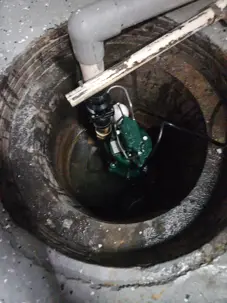
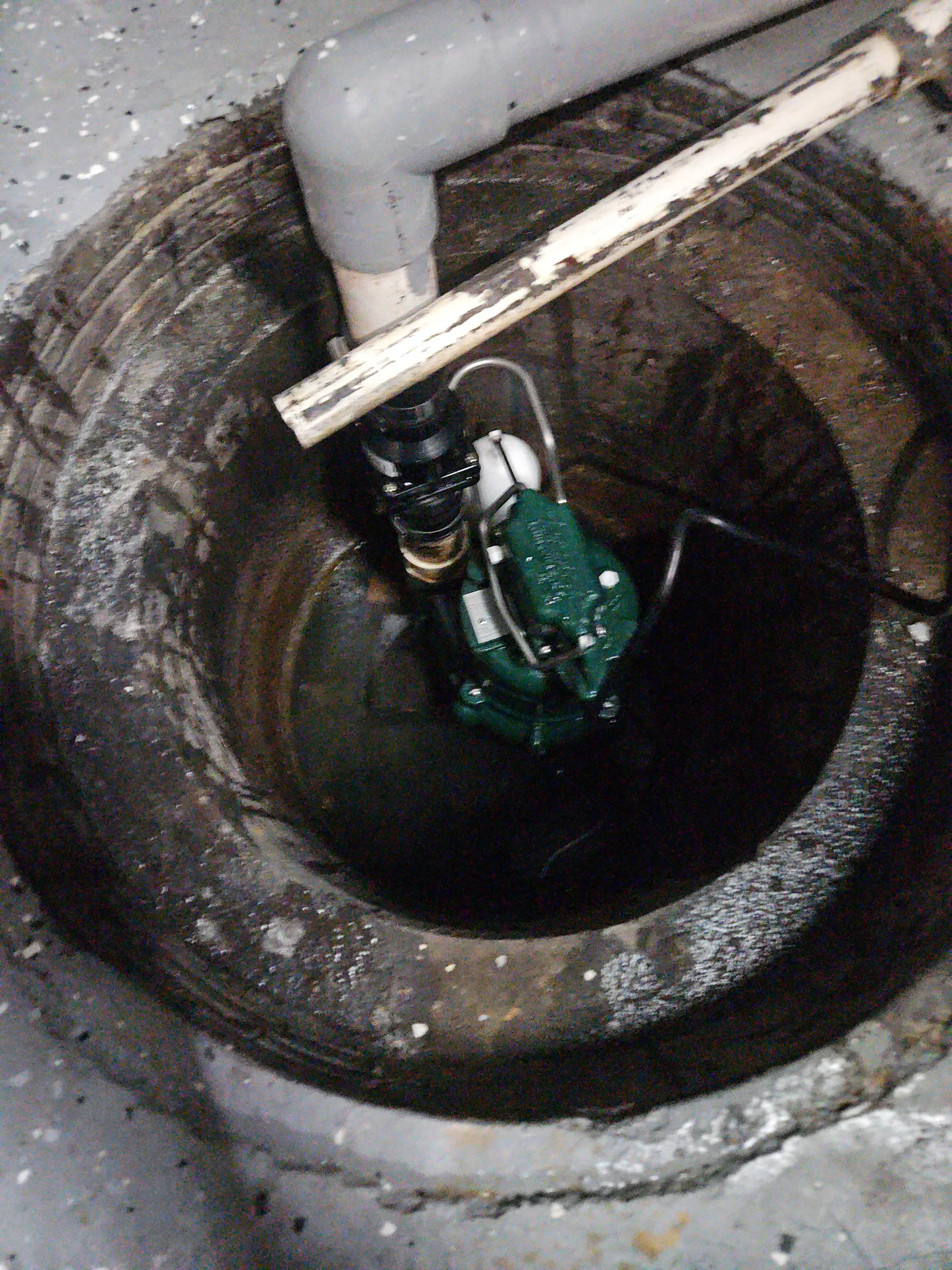
Short version: a sump pump pulls rising groundwater out from under your basement floor and pushes it away from the house. It only gets tested when the weather is bad, which is when a failure costs the most. Around Beavercreek the piece people forget is the discharge line, because a pump that runs fine indoors does nothing for you if the water freezes or backs up on its way out. A battery backup covers you when the power drops during a storm. Installed systems run roughly $1,300 to $5,000, depending on whether you want one pump or two.
November is when the calls start. Not because pumps break in November, but because that's the first month anybody notices.
Kassandra Hornik and Alexis talked through this on a recent episode, and you can listen to the whole conversation here. The short version is below.
What the Pump Is Actually Fighting
"A sump pump is all about controlling groundwater," Kassandra said. "When we have a large amount of rain, that groundwater level is going to come up higher and it can come up above the level of the living space."
Picture the soil around your foundation as a sponge. Soak the sponge and the water has to go somewhere. The pit in your floor gives it a place to collect, and the pump gives it a way out.
Out toward Trebein Road and the newer subdivisions, plenty of lots sit low with heavy clay underneath and not much slope to work with. Add a finished basement with a rec room in it and the pump stops being optional.
The Discharge Line Nobody Walks Out to Check
This is the part specific to Beavercreek winters. Your pump can be brand new and running perfectly and you can still find water on the floor, because the pipe carrying that water outside froze, clogged, or dumped it right back against the house.
Go find where your line ends. A few things to look at while you're out there:
- If it empties within a few feet of the foundation, that water is just going to soak back down and come around again.
- Long flat runs hold standing water, and standing water freezes.
- Leaves, mulch, and mud pile up over the opening without anyone noticing.
A pump pushing against a blocked line will hum, get hot, and eventually quit.
Why a Frozen Line Takes the Pump With It
Here's the failure we see most in December and January. Water sits in the flat run of the discharge overnight. It freezes into a plug. The next time the pump kicks on, it's pushing against a closed pipe.
The pump doesn't know that. It runs, builds pressure, gets hot, and either trips out or burns up. Meanwhile the pit fills, because nothing is leaving.
A few things help. Keep the run as short and as steep as you can. Some setups use a larger diameter pipe on the outdoor section so a partial ice ring doesn't choke it completely. And there's a fitting called a freeze relief that gives water somewhere to escape if the line downstream is blocked, which is cheap insurance on a house that's had the problem before.
Is Your Pump Sized Right for the House?
Bigger isn't automatically better, which surprises people. A pump that's oversized for the pit fills it, empties it in two seconds, and shuts off. Then it does it again. That rapid on-and-off cycling is hard on the motor and the switch, and it's one of the quieter reasons pumps die early.
Most homes are fine on a one-third horsepower pump. A half horsepower makes sense when the pump has to lift water a long way up, or push it a long distance out to daylight, or when the water table sits high enough that the pump is working most of the spring. On a lot of the low-lying lots out this way, that second category is real.
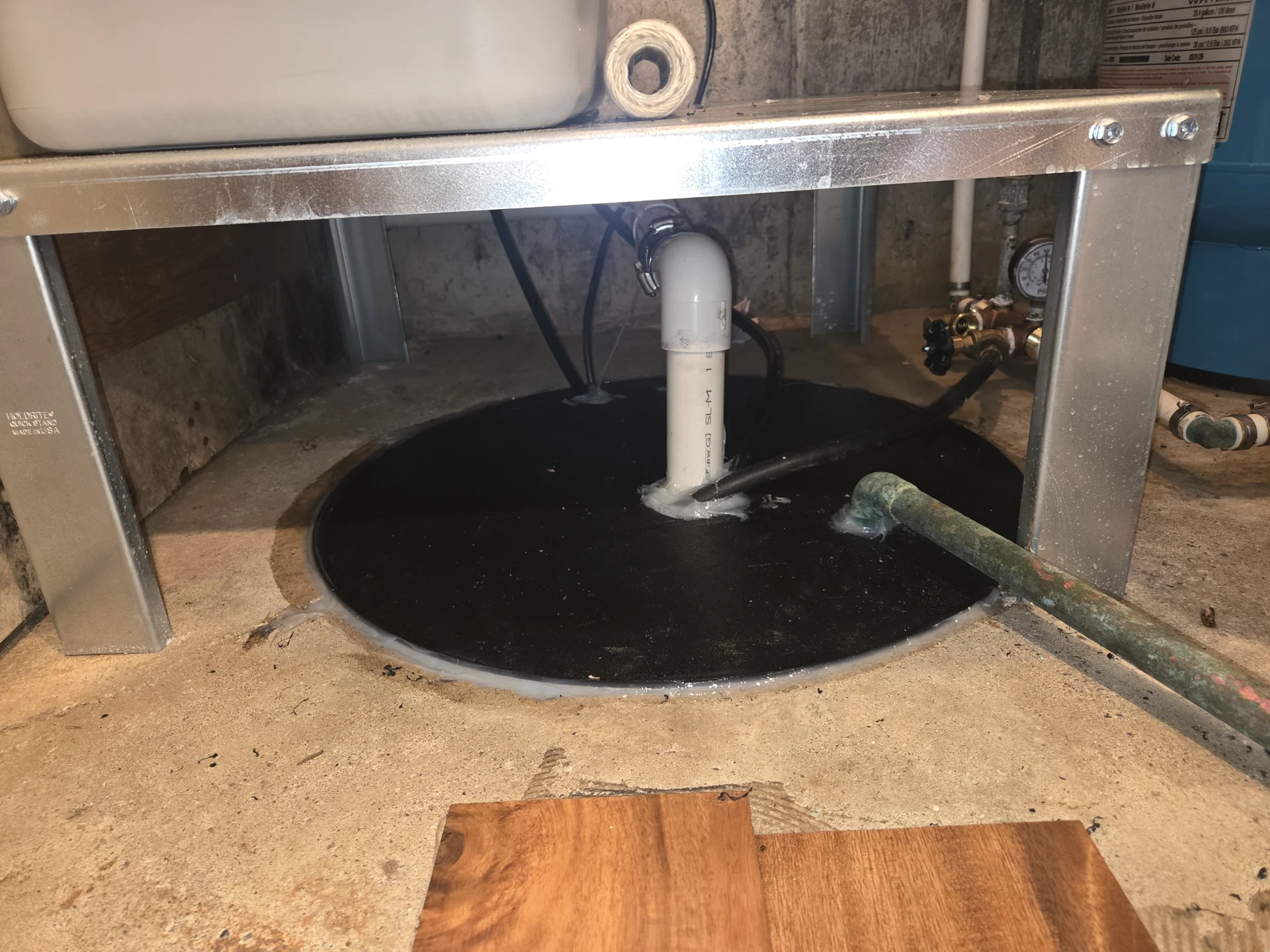
The pit matters as much as the pump. Too shallow and the pump short cycles. Too narrow and there's no room for a backup later. If you're replacing anyway, that's the moment to fix a pit that was never right.
Where That Water Is Allowed to Go
The discharge has to end somewhere, and the where matters more than most people expect.
It needs to get far enough from the foundation that the water isn't just taking a lap and coming back. Ten feet is a reasonable minimum and further is better if the grade allows it. It also needs to run downhill the whole way, because any low spot in the line holds water, and held water freezes.
What it should not do is tie into the sanitary sewer. Most local codes prohibit it, and beyond the code question, sending clean groundwater into the sewer is what backs up treatment systems during a heavy rain. If your discharge disappears into a floor drain or a laundry standpipe, that's worth checking on before you inherit a problem you didn't create.
The other thing worth knowing is where it lets out relative to your neighbor. Dumping a pump line toward a property line is an easy way to start a conversation nobody enjoys.
When the Power Goes Out
"If your sump pump is plugged into the wall and your home loses power, it's not going to be able to remove the water from your home," Kassandra said.
Storms take the power with them often enough that this isn't some rare scenario. A battery backup pump carries its own power source and takes over on its own. It also buys you room during a long soaking rain when a single pump can't keep pace.
The Test That Takes Five Minutes
Alexis said something on the episode that stuck with me: "I do feel like I need to check my sump pump every time I hear about a major storm coming."
Pour a bucket of water into the pit. The float should rise and the pump should kick on. Then walk outside and confirm water is actually coming out where it's supposed to. If nothing happens, or it runs but the level doesn't drop, call before the next storm instead of during it.
Questions We Get Asked Out Here
How long should a pump last? Seven to ten years is typical. Less if it runs hard every spring, which plenty do on these lots.
My pump runs constantly in the spring. Is that bad? It means the water table is high, which is information, not necessarily a problem. What's worth checking is whether the pump is keeping up and whether it's ever getting a rest. Constant running with no break is a pump that will not see year eight.
Do I need a generator instead of a battery backup? A generator covers the whole house, which is nice, but it only works if somebody is home to start it. A battery backup runs on its own at three in the morning while you're asleep. Different tools.
Is a second pump overkill? Not if the basement is finished. Two pumps in one pit means one can fail and you still have a working house.
Replacing a system around Beavercreek lands somewhere between about $1,300 for a straightforward primary pump and roughly $5,000 for a combo setup with a battery backup and a six year Dry Basement Guarantee. Where you land depends on what's already down there and what you're protecting.
Message us here on the site and we'll talk it through, or grab a time on the schedule and we'll come take a look.