
Quick answer: In most Beavercreek homes the main water shutoff valve is inside, on the cold water line where it enters the house, and the fastest way to find it is to start at the water heater and follow the cold pipe back. It will be one of two things — a lever you move a quarter turn, or a round handle you turn several times. Go find it today, turn it all the way off, then open a faucet and confirm the water actually stops, because a valve nobody has ever turned is a valve nobody knows is broken. As Honey Go Fix It CEO Kassandra H. put it on a recent episode of the Honey Go Fix It podcast, “The first place you’re gonna look is I would start actually with your water heater, something big that you can identify, or you should be able to identify. And the cold line coming into that is typically right off of the main.” Here is how that plays out for Beavercreek homeowners, and what to do about it.
Should I go find my main water shutoff valve right now?
Yes, and turn it off while you are standing there. This is a ten minute job with no tools, and it is the one piece of homework that changes what a burst pipe costs you.
The reason is mechanical, not dramatic. A failed supply line keeps delivering water at full pressure until something stops it. Everything about how bad the damage gets — how far it spreads, how much drywall and flooring comes out, whether it reaches a finished basement — comes down to how many minutes the water ran. The valve is what sets that number, and only if someone can find it and close it.
Where is the main shutoff valve in a Beavercreek home?
Start at the water heater. It is the biggest, most obvious thing in the basement or utility room, and the cold line feeding into it usually comes straight off the main. Follow that cold pipe back toward the wall where the water enters the house, and the valve you find on it is almost certainly your main shutoff.
That is the trick worth remembering: do not go hunting for a small valve in a dark basement. Find the big thing and work backwards along the cold pipe.
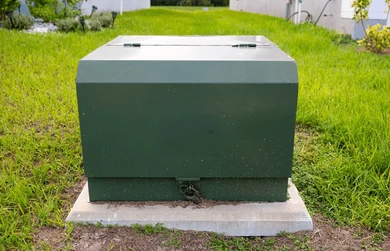
You may also spot a valve out near the curb or the sidewalk, usually under a metal cap. That one is a curb stop — the city's valve for your home, not yours. The water company uses it for their own work. Leave it alone; the valve that is yours to use is inside.
What does the valve actually look like?
One of two things, and it matters which one you have.
A lever means you have a ball valve
You will see straight pipe, a bulge where the valve body sits, and a lever on top. A ball valve closes with a single quarter turn — a ball with a hole through it rotates so the hole no longer lines up with the pipe. Fast, and easy to see at a glance whether it is open or closed.
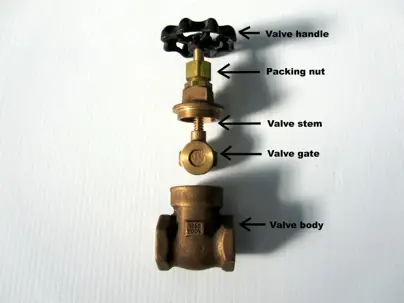
A round handle means you have a gate valve
A gate valve is the older design: a flat plate, the gate, that lowers across the opening as you turn the handle. It takes several full turns to close, and there is no obvious visual cue for how far along you are.
Newer Beavercreek builds tend to have the lever. In an older home, expect the round handle. The ball valve is better, and Kassandra is direct about why: “there's a few reasons, but the gate valves, because you have to turn it multiple times, it takes longer to shut off. And the last thing that you want is to take extra time to shut something off in an emergency. Every second is, you know, possibly gallons more of water that is coming into your home.”
Which way do I turn it to shut the water off?
On a round handle, righty tighty is the right instinct — turn it clockwise until it stops. On a lever, you want the lever ending up crosswise to the pipe rather than lined up with it.
Work this out now, in good light, with dry floors. Not while you are standing in an inch of water at two in the morning.
Why does turning it all the way off matter so much?
Because a valve can look closed and still be passing water, and you cannot tell by feel.
The failure has a name. “It does something we call leaking past,” Kassandra says. “That means it's in the closed position, but it's not so like stopping the flow of water. And that is much more likely to happen with a gate valve.” The gate stops short of the bottom, or sediment holds it up, and a gap stays open.
Gate valves are worst for it precisely because there is no clear stopping point to warn you. As Kassandra puts it, “Moving the lever into the closed position or just turning your gate valve until it is all the way closed or feels like it's all the way closed is not going to tell you whether or not it has actually stopped the flow of water. So that's why you need to open up a faucet, let it run.”
That is the whole test. Close the valve, open a faucet somewhere in the house, and watch it run dry. If it keeps trickling, the valve is leaking past and it needs replacing.
Is there a risk to exercising an old valve?
Some, and it is worth naming honestly. Exercising a valve — turning it closed and back open so it does not seize — is a good habit, and Kassandra explains what it prevents: “That's something we called exercising the valve because you can have valves that are seized in one position. So like seized means that it's rusted, corroded, has sediment that's built up. Something is preventing you from easily turning it.”
The flip side is that a valve which has already started to seize can take real force to close, and force on tired old plumbing is how you find out what else was tired. That is a fair trade on a Saturday afternoon with a plumber reachable. It is a terrible one to discover during an emergency.
So here is where to stop: if the handle will not budge, or the water does not fully stop, do not lean on it harder. That is the finding. You have learned something important on a quiet afternoon, and replacing a main shutoff is a far smaller job than the one you get by putting it off.
Who else in the house needs to know where it is?
Everyone who is ever the responsible adult in the building — you, your spouse, any roommates, and your teenagers if you ever leave them home alone.
Then label it. A tag, a sign, paint on the joist, anything that lets somebody who has never been shown find it in the dark. On the podcast, Alexis put the stakes plainly: if the one person who knows is at work, or on vacation, or visiting family, “you don't have a shutoff valve, you have an emergency phone call and a game of trivia.”
What Honey Go Fix It can do
We are based right here in Beavercreek at 2766 Indian Ripple Rd, and we work on homes across the Greater Dayton area. If your main shutoff will not turn, will not fully stop the water, or you cannot find it at all, that is a straightforward visit: we locate it, test whether it actually holds, and replace it with a quarter turn ball valve if it does not.
If you would rather it just get looked at on a schedule, our Sweet Service Plan includes two inspections a year, so a seizing valve gets caught before it matters.
Frequently asked questions
My Beavercreek house was built in the 1970s. Do I have a ball valve or a gate valve?
Most likely a gate valve, the round handle kind, since ball valves became standard later. Budget a little extra time to close it, and take the leaking past test seriously — gate valves are the ones most likely to fail that way.
I found a valve near the curb at my Kettering home. Can I use that one?
No. That is the curb stop, and it belongs to the water company, not to you. The valve you want is inside the house, usually near the water heater.
I shut the valve off in my Centerville home and water still runs. What does that mean?
That is leaking past, and it means the valve is no longer doing its job and needs to be replaced. It is much better to learn that during a test than during a burst pipe.
Does every leak mean shutting off the whole house?
No. Most fixtures have their own small shutoff nearby, sometimes called an angle stop, so a single running toilet or leaking sink can usually be isolated without killing water to the rest of the house. The main is for when you cannot find the source, or the leak is in the supply line itself.
Nobody at my Dayton house can turn the valve. What now?
Call us rather than forcing it. A seized or leaking past main shutoff is a repair, and doing it on a scheduled visit is far cheaper and calmer than doing it during a flood.
Two minutes today
Go find it. Turn it off. Check that a faucet runs dry. Turn it back on. Tell one other person in the house where it is, and label it while you are standing there.
If any step of that goes wrong, you have just found a problem on a quiet afternoon instead of at two in the morning, and that is the entire point. Questions about your main shutoff, or want it replaced before winter? Call us at (937) 358-6390 or pick a time that works.
Honey Go Fix It provides residential plumbing services for homeowners in Dayton, Beavercreek, Centerville, Springboro, Xenia, and nearby suburbs.