
The Short Answer: The letter you received is part of a nationwide EPA safety mandate requiring Montgomery County to identify the exact material of every residential water pipe connecting to the street. Your letter means your underground line is flagged as Lead, Galvanized Steel (requiring future replacement), or simply "Unknown" due to missing historical records. While your drinking water is not in immediate danger, the county needs these records updated. To skip the stressful DIY guesswork and stay compliant, Honey Go Fix It is offering local homeowners a 100% Free Professional Water Line Inspection—click here to book your slot online or call us at 937-777-9626 before our schedule fills up!
If you opened your mail recently and found an official notification from Montgomery County Environmental Services about your water service line, you aren’t alone. Thousands of neighbors across Dayton, Kettering, and surrounding communities received these exact same letters.
Understandably, seeing words like "Lead", "Galvanized", or "Unknown" printed next to your drinking water information can cause some immediate worry.
Let’s break down exactly what these letters mean, why you received one, and how you can figure out what is actually under your front lawn—without having to guess.
 Why Did I Get This Letter?
The U.S. Environmental Protection Agency (EPA) recently updated its safety regulations, requiring water utilities nationwide to map out exactly what material every single water service line is made of.
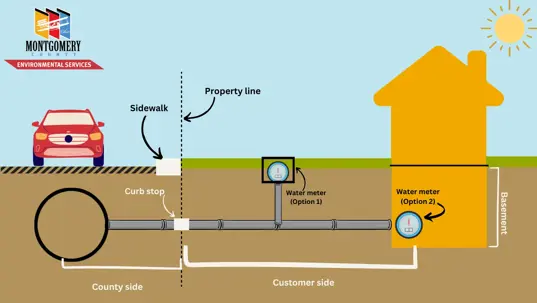
A service line is the underground pipe that connects the main water line in the street directly to your home's internal plumbing.
In Montgomery County, ownership is split:
- The County owns the section from the street water main to your property line (the curb stop).
- You (the homeowner) own the section from the property line all the way into your house.
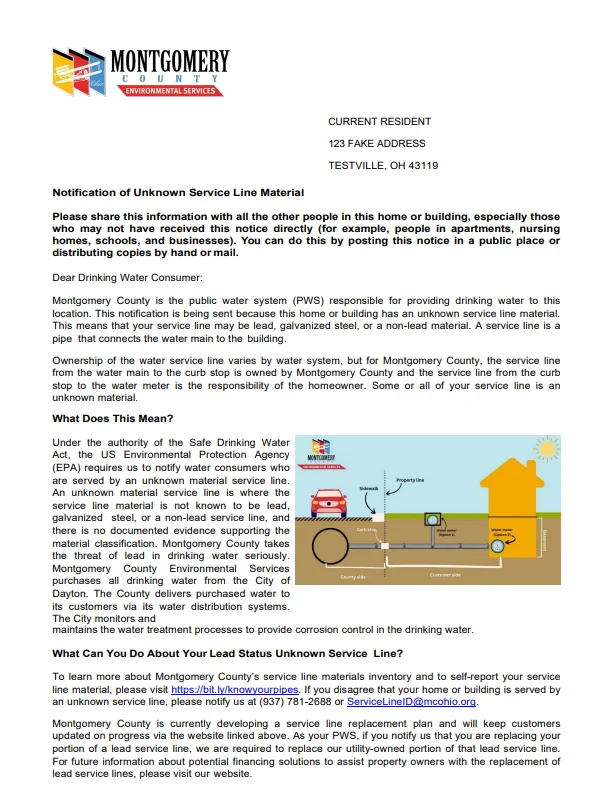
Because many homes in our area were built decades ago, historical records aren't always complete. The county sent out three specific versions of this letter to update their database.
The 3 Types of Letters: Which One Did You Get?
1. The "LEAD" Notice
This means the county’s historical records, recent hydro-excavations, or neighborhood data indicate that part or all of your service line is made of lead.
Don't Panic: The county explicitly states that your health is likely not in imminent danger. Over years of use, natural mineral scaling builds up on the inside of the pipes, acting as a protective barrier. However, lead pipes do need to be phased out and replaced to ensure long-term safety.
2. The "GALVANIZED REQUIRING REPLACEMENT" (GRR) Notice
This letter means your line is made of galvanized steel. While steel itself doesn't contain lead, old galvanized pipes can capture and trap lead particles released from old upstream plumbing. Because of this, the EPA requires these lines to be treated with the same priority as lead lines and eventually replaced.
3. The "UNKNOWN" Notice
This is the most common letter. It simply means the county does not have a clear record of what your pipe is made of. It could be perfectly safe copper or modern plastic, or it could be older lead/galvanized steel. They just don't know yet, and they are asking residents to check.
The DIY "Scratch and Magnet" Test (And Why It's Tricky)
The county's website suggests finding where the water pipe enters your basement or crawlspace (before the meter) and performing a DIY test using a penny and a refrigerator magnet:
- Copper: Looks like a penny, a magnet won't stick.
- Plastic: Usually blue, white, or black rigid pipe.
- Galvanized Steel: Dull gray; a magnet will stick to it.
- Lead: Dull gray and very soft; a penny will easily scratch it, revealing a shiny silver color underneath. A magnet will not stick to it.
While it sounds simple, locating the correct pipe, distinguishing old tarnished lead from old galvanized steel, and knowing exactly where your property line responsibility begins can be stressful if you aren't a professional plumber.
Skip the Guesswork: Claim Your Free Water Line Inspection
.png.2606040559178.webp) You shouldn't have to guess when it comes to your home's infrastructure or your family's peace of mind.
You shouldn't have to guess when it comes to your home's infrastructure or your family's peace of mind.
To help our local Montgomery County neighbors navigate these new EPA regulations, Honey Go Fix It is offering a 100% Free Service Line Inspection.
What we will do for you:
1.Locate & Identify:Step 1.
Our licensed professionals will pinpoint exactly where your incoming supply line enters your home.
2.Verify the Material:Step 2.
We will professionally test the line to definitively verify if it is copper, plastic, galvanized steel, or lead.
3.Map Out Next Steps:Step 3.
If your line is safe, we’ll document it so you can update the county. If your line is lead or galvanized, we will provide you with a clear, clear-cut plan and a quote for modern, safe replacement.
There is zero obligation, no catch, and absolutely no cost for the inspection. We just want to ensure our community stays informed, safe, and compliant with the new local standards.
Montgomery County Water Service Line Letters: Frequently Asked Questions
Is my drinking water safe if I received a Lead or Galvanized notice?
Yes, your water is likely safe for daily use. Montgomery County Environmental Services actively treats local drinking water to reduce corrosivity, and over decades of use, natural mineral scaling builds up on the inside of pipes to form a protective barrier. However, lead and galvanized lines still pose a long-term risk and must eventually be phased out and replaced under new EPA safety guidelines.
Who is responsible for paying to replace a lead or galvanized water line?
Responsibility for the water service line is split right at your property line (usually near the curb stop valve). Montgomery County is responsible for replacing the utility-owned portion from the street water main to your property line. You, the homeowner, own and are responsible for the section running from the property line all the way into your house.
What happens if I ignore the "Unknown" water line letter?
If your water line is listed as "Unknown," the EPA requires Montgomery County to keep tracking it until the material is verified. While you won't face an immediate fine, ignoring the letter means your home will remain flagged in the public water system database as potentially having a lead line, which can create significant headaches and disclosures if you ever try to sell or insure your home in the future.
Can I just do the "Scratch and Magnet" test myself?
You can try! By finding where your water pipe enters your home (usually before the water meter in a basement or crawlspace), you can scratch it with a coin. If it scratches easily like soft silver, it’s lead; if a magnet sticks to it, it’s galvanized steel. However, because older pipes are often heavily corroded, painted, or wrapped, distinguishing the materials accurately can be incredibly difficult and stressful for a non-plumber.
Why is Honey Go Fix It offering a completely free inspection?
We live and work right here in the Miami Valley, and we know how stressful it is to open an official government letter filled with words like "Lead" and "Contamination." We are offering these 100% Free Water Line Inspections to give our neighbors definitive answers, protect our community's health, and help you update the county with accurate information—with absolutely zero cost, catch, or obligation to you.
Honey Go Fix It provides residential plumbing services for homeowners in Dayton, Beavercreek, Centerville, Springboro, Xenia, and nearby suburbs.