
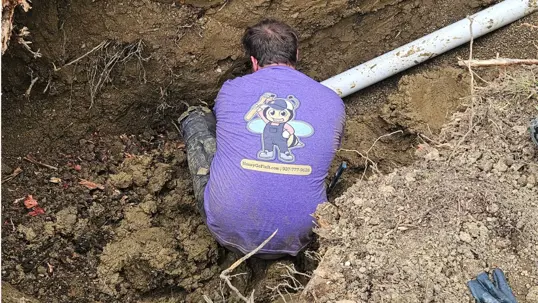
In the Miami Valley area, tree roots are the main cause of broken underground pipes and severe sewage backups.
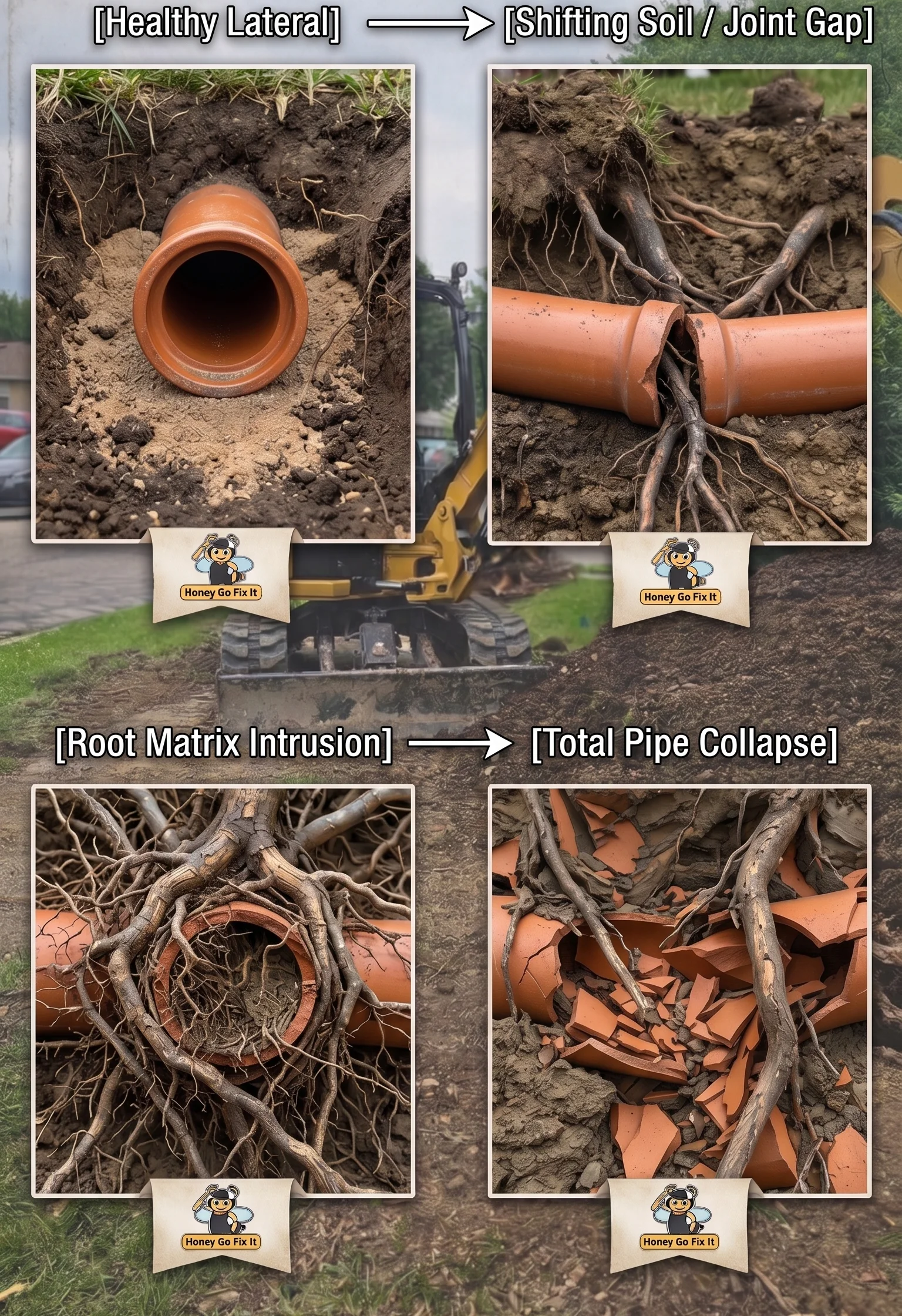
Many homeowners in Beavercreek and Xenia are proud of their green lawns. However, underneath that grass, there is a constant battle. Large trees like oak and maple have roots that grow deep and wide. When the weather is dry, these roots look for water. They follow the moisture on the outside of your sewer pipes until they find a tiny crack to crawl inside.
Once roots get inside a sewer line, they grow into a thick mess that catches waste. This causes slow drains, gurgling toilets, and eventually, a gross sewage backup in your basement.
Local Soil and Old Pipes
The heavy clay soil in Beavercreek pushes hard on pipes. Meanwhile, older clay pipes in Dayton and old connections in Xenia make it easy for roots to get in through loose joints.
Plumbing problems often depend on where you live in the Miami Valley:
- Dayton: Older homes often have pipes made of clay or iron. When the ground freezes and thaws in Ohio, the soil shifts and causes these old pipes to crack.
- Beavercreek: The soil here is mostly thick clay. Clay grows when it is wet and shrinks when it is dry. This movement puts a lot of pressure on pipe joints, creating gaps for roots.
- Xenia: Many homes have a mix of old and new pipes. The spots where different pipes meet are weak points where roots often break in.
Roots don't actually drill through solid walls. Instead, they find small weak spots and act like wedges that grow until the whole pipe collapses.
 The High Cost of Waiting
Ignoring a tree root intrusion in your sewer line is a ticking financial time bomb. Roots don't just sit dormant inside a pipe; they feed on the constant supply of moisture and nutrients flowing from your home, expanding and multiplying by the day. What starts as a minor obstruction will inevitably lead to a catastrophic structural failure. When that happens, you aren’t just dealing with a plumbing nuisance—you are facing an immediate homeowner crisis.
Delaying a permanent fix exposes your home and finances to severe risks:
- The Nightmare of Category 3 "Black Water" Flooding: When a root-choked pipe completely blocks or collapses, raw sewage has nowhere to go but back up into your home through the lowest drains. This wastewater is teeming with dangerous pathogens, parasites, and bacteria. A single backup can instantly ruin a finished basement, destroy expensive mechanical systems like your water heater or furnace, and ruin irreplaceable personal belongings. Worse yet, standard homeowners insurance policies typically do not cover sewer backups unless you have explicitly added a special, costly rider to your policy.
- Hidden Foundation and Structural Damage: A broken sewer pipe constantly erodes the ground beneath your property. As thousands of gallons of wastewater escape into the surrounding soil, it creates a "washing machine" effect underground, slowly carrying away the earth supporting your yard and home. Over time, this underground erosion creates massive subsurface voids, leading to sudden sinkholes in your lawn. If the break occurs anywhere near your home's footprint, the compromised soil can cause your foundation to settle, crack, or shift turning a plumbing issue into an incredibly expensive structural failure.
- The "Pruning Effect" of Temporary Fixes: Many homeowners try to buy time by repeatedly hiring a drain cleaner to mechanical-snake or "rooter" the line. While this clears a temporary path for water, chopping the roots actually acts exactly like pruning a backyard hedge it stimulates aggressive, thicker, and faster regrowth. Each time you cut them without sealing the pipe, the roots return with a vengeance, accelerating the timeline toward a total, irreversible line collapse.
The Bottom Line: What begins as a frustratingly slow drain can escalate into an unlivable home environment and tens of thousands of dollars in overlapping plumbing, biohazard remediation, and structural repairs.
Steps You Can Take Now
You don't have to wait for a catastrophic backup to protect your property. By implementing a few proactive maintenance habits and keeping a watchful eye on your plumbing's behavior, you can catch sewer line vulnerabilities long before they turn into full-scale structural emergencies.
Here are the critical steps every homeowner should take today:
- Map Your Yard and Landscape Strategically: Simply guessing where your main sewer lateral runs is a risky gamble. Locate your line's path which typically runs in a straight line from your home's main internal plumbing stack out to the municipal street main or septic tankand establish a strict 15-foot safety buffer zone on either side of it. Avoid planting aggressive, water-seeking trees (such as Willows, Maples, Elms, and Birches) anywhere near this perimeter. If you want to landscape near the line, opt exclusively for slow-growing, shallow-rooted shrubs or perennials.
- Decode Your Plumbing's Early Warning Signs: Your drains will almost always try to warn you before a total blockage occurs. Pay close attention to how your plumbing fixtures interact. If your toilet gurgles or bubbles while your washing machine is draining, or if water rises up into your basement shower when you run the kitchen sink, you are dealing with a severe main-line restriction. Other immediate red flags include unexplained slow drainage across multiple rooms simultaneously, persistent sewer odors in your basement, or a patch of grass in your yard that is suddenly much greener and lusher than the rest of the lawn.
- Locate and Clear Access to Your Sewer Cleanout: In a plumbing emergency, every minute equals dollars. Your main sewer cleanout—a 3-to-4-inch threaded plastic or cast-iron cap located in your yard, basement, or crawlspace—is the vital entry point a technician needs to clear a blockage or insert a diagnostic camera. If your cleanout is buried under landscaping mulch, hidden behind basement drywall, or overgrown with weeds, a plumber will waste precious time locating it while premium emergency labor rates tick away. Ensure it is clearly marked, visible, and entirely unobstructed.
- Emergency Tip: Locating your exterior cleanout can actively save your home from a biohazard disaster. If you experience a sudden, severe main-line backup, carefully unscrewing the exterior cleanout cap relieves the pressure inside the system, safely redirecting the rising wastewater out into your yard rather than forcing it up through your basement drains.
When to Call a Plumber
Chemicals or simple drain snakes only provide a temporary fix. They don't repair the broken pipe. If your drains are always slow, it is time for a permanent fix from a professional.
Modern plumbing needs the right tools and strong materials to make sure your sewer works correctly for many years.
 Case Study: Overcoming Severe Root Intrusion in Huber Heights
We recently responded to an urgent call from a homeowner in Huber Heights whose basement floor drain had begun severely bubbling and backing up whenever the household ran water. Recognizing the signs of a critical main-line restriction, our team immediately deployed a high-resolution sewer inspection camera down the line. The diagnostic footage revealed a textbook plumbing nightmare: aggressive roots from a massive tree on the neighboring property had exploited a tiny seam in the vintage clay pipe, completely filling the interior of the line and creating an impenetrable block.
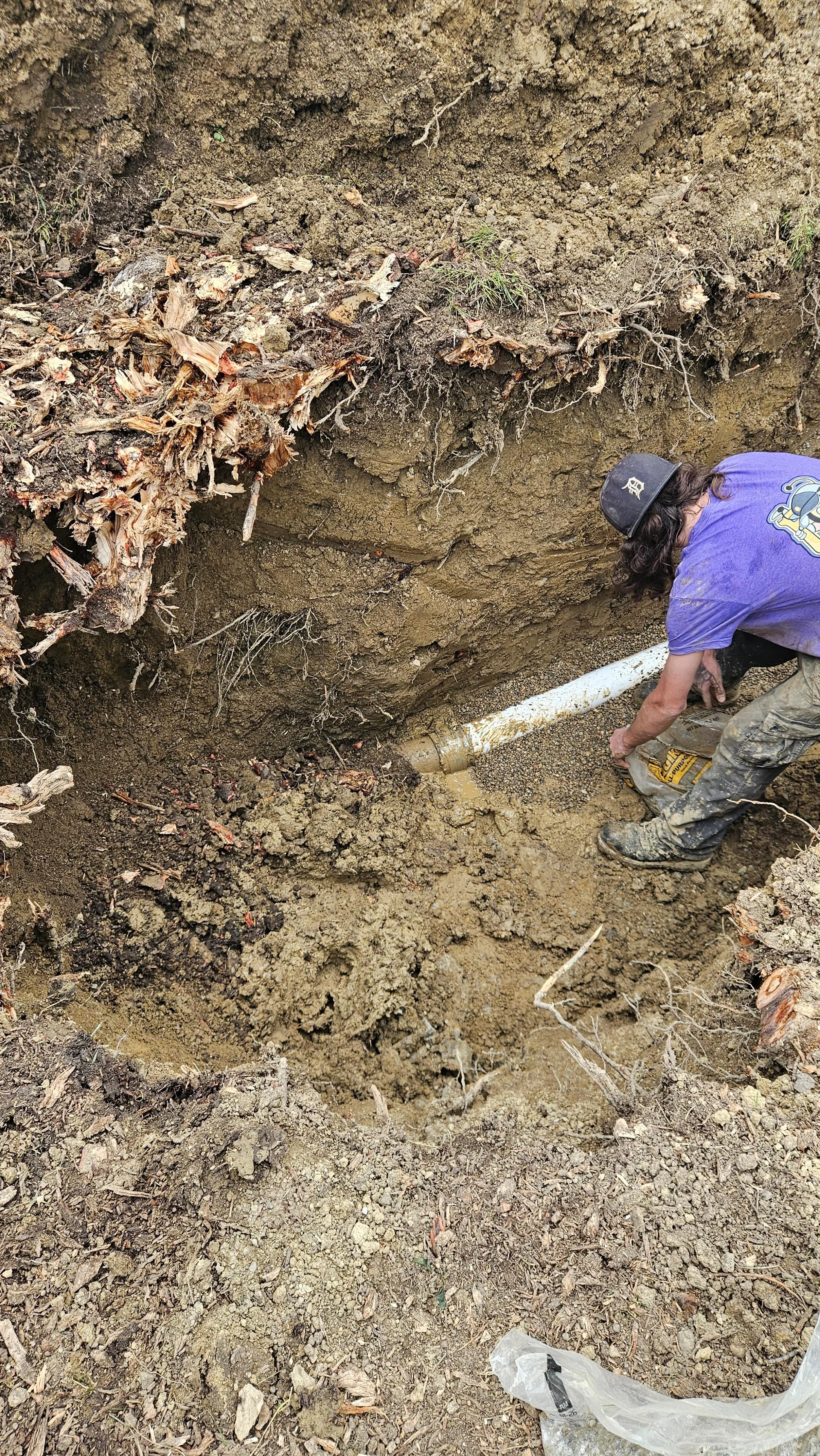
To resolve the issue permanently and prevent a catastrophic basement flood, our crew utilized a compact excavator to carefully dig a precise trench along the sewer lateral's path, minimizing disruption to the homeowner's lawn. We extracted the brittle, failing clay tile section and replaced it with ultra-durable, smooth-walled PVC pipe, utilizing heavy-duty shielded couplings to create an airtight, root-proof seal.
Because Huber Heights features dense, heavy clay soil that shrinks and swells significantly with changing seasonal moisture levels, laying a pipe directly into the dirt is a recipe for future shifting and joint failure. To mitigate this risk, we meticulously bedded the new PVC line in a deep layer of washed gravel. This aggregate wrap acts as a protective buffer, allowing for proper drainage, relieving external soil pressure, and ensuring the system remains structurally sound—keeping the home completely safe and dry for decades to come.
Sewer Line Frequently Asked Questions
Do I need a permit for sewer work in my county?
Yes. Most cities and counties require permits and inspections. This makes sure the work is done correctly and follows the law.
What is a backwater valve?
This is a special valve that prevents sewage from flowing backward into your home. It is often required for basement drains.
How much does it cost to fix a sewer line in Dayton?
The cost depends on how deep the pipe is and what is in the way. Most repairs cost between $10,000 and $30,000.
Will my insurance pay for a new sewer line?
Standard insurance usually doesn't cover this unless you added a special "Service Line" or "Water Backup" option to your plan before the failure happened.
How long does the replacement take?
Most sewer line jobs take about one or two days to finish.
Protect Your Home Today
Don't wait for your basement to flood. If your drains are slow, call our team for an honest checkup of your pipes.
Contact Honey Go Fix It today to inspect your sewer line and get peace of mind.
Honey Go Fix It provides residential plumbing services for homeowners in Dayton, Beavercreek, Centerville, Springboro, Xenia, and nearby suburbs.